Erasmus+  Courses KA1 •  Online Training •   Invited Expert •  KA2

Categoría: Blog – Inglés

  • Mindfulness in Education: A Practical Project-Based Approach

    Mindfulness in Education: A Practical Project-Based Approach

    20–24 July 2026 | University College Cork, Ireland

    Laurus Regenerative will offer the course Mindfulness in Education: a practical project-based multi-disciplinary approach to enhance creativity and collaboration in the community through culture, the arts and nature from 20–24 July 2026 at University College Cork, Ireland.

    This course is directed at educators who would like to learn how to incorporate mindfulness and social-emotional learning outside of the classroom, using a project-based or experiential approach through cultural, social, outdoor or nature-based activities.

    About the course

    Mindfulness is known to improve wellbeing and can foster critical thinking, communication, creativity and empathy. These are valuable life skills that can be transferred to students and educational communities.

    During the course, participants will work on becoming more emotionally competent, both on an intrapersonal and interpersonal level. The course also supports participants in learning how to be truly present, experience life more fully and contribute to the regeneration of their communities.

    Participants will also receive coaching to create their own GROW project, designed to be applied to their specific context.

    Course objectives

    The main objective of this mobility is to learn the basic theory behind mindfulness and socio-emotional learning, while acquiring practical skills and resources to bring that theory into life through projects in the community and in nature.

    The course aims to generate an impact on:

    • creativity;
    • critical thinking;
    • wellbeing;
    • inclusion;
    • communication;
    • collaboration;
    • cooperation.

    In this approach, communication, collaboration and cooperation lead to regeneration.

    Added value of the mobility

    The course equips participants to reflect on their experience in their own context and to support their professional and personal development.

    It also helps participants build competence and confidence by becoming more conscious of how they relate to the situations and people around them.

    Activities to be carried out

    The course is centred around practical activities in the community and nature, designed to reconnect and regenerate with what is essential.

    Using a project-based approach that integrates individual and group work, participants will be able to:

    • understand the theory and practice of mindfulness and its usefulness to enhance experiences;
    • develop empathy and enhance teamwork;
    • embrace difficulty and find solutions to problems;
    • communicate effectively;
    • improve the mental health and wellbeing of their communities;
    • stimulate creativity and critical thinking.

    Expected outcomes and impact

    By the end of the course, participants will be able to transfer the skills learned to their own context and incorporate mindfulness to enhance experiences and foster collaboration with the community.

    Participants will also be able to:

    • become more aware of the physical, social and emotional needs of others;
    • help and motivate their students to achieve goals while having a social impact;
    • build a wiser and more compassionate future for their communities;
    • embrace new cultural contexts;
    • build networks with international colleagues.

    Sample timetable

    Day 1 – Monday
    Sharing intentions, outlining objectives and understanding mindfulness and social-emotional learning in the educational context.
    Basic mindfulness practices.
    Exploring the theory of emotions.

    Day 2 – Tuesday
    Mindfulness, wellbeing and regeneration.
    An exploration of what mindfulness and social-emotional learning can achieve for participants and their school communities.

    Day 3 – Wednesday
    Mindfulness, art and culture.
    Includes a visit to local centres of cultural, educational or artistic interest.

    Day 4 – Thursday
    Mindfulness and nature.
    An experience in nature, green space or park, including forest bathing and other activities.

    Day 5 – Friday
    Becoming a mindful educator.
    Implementing a GROW project.
    Peer sharing session.
    Assessment and review of learning objectives.
    End-of-course feedback.
    Certificate presentation.

    Practical information

    Dates: 20–24 July 2026
    Location: University College Cork, Ireland
    Accommodation: Accommodation options available
    Funding: ERASMUS+ KA1 funding accepted
    Discounts: Individual and group discount available

    More information

    For more information about the course, please consult the Mindfulness project based 

    Registration

    To register your interest or request more information, please complete the registration form.

  • Learning Beyond the Classroom: A Training Experience in Málaga with iDevelop

    Learning Beyond the Classroom: A Training Experience in Málaga with iDevelop

    Education does not always happen inside a classroom. Sometimes, learning appears while walking through a city, sharing a conversation, observing the environment or discovering new ways of communicating with other people and cultures.

    At Laurus Regenerative, we have completed a new training experience in Málaga in collaboration with iDevelop, through a Basic English course that allowed participants to strengthen their communication tools in an international environment.

    For us, learning a language is not only about acquiring vocabulary or improving a technical skill. It is about opening doors, gaining confidence and creating new forms of connection. Every word learned can become an opportunity to participate, share ideas and feel part of a wider community.

    This activity reminded us that education can be close, practical and transformative when it is lived through experience. Málaga became an active learning space, where communication, culture and collaboration came together naturally.

    We are also pleased to continue collaborating with iDevelop on training proposals that integrate learning, movement and a conscious perspective. Our upcoming course will focus on Outdoor Learning, an invitation to take teaching beyond the classroom and discover how the environment can become a living resource for learning.

    Thank you to iDevelop for the collaboration, and to all participants for their energy, commitment and openness.

    Regeneration with purpose, leadership with soul.

    Are you interested in joining international educational experiences with a regenerative approach?
    Explore our Erasmus+ courses and our training proposals for teachers, organisations and educational communities.

  • An Internship Experience that Connects Talent, Cultures and Learning

    An Internship Experience that Connects Talent, Cultures and Learning

    At Laurus Regenerative, we believe that education is also built through human connection, collaboration and the possibility of creating bridges between cultures.

    During this period, we had the joy of welcoming Martyna, a graphic design student from Poland, who became part of Laurus Regenerative through an international internship experience. Her presence brought creativity, a fresh perspective and a warm willingness to learn, collaborate and contribute to the growth of our project.

    For us, welcoming students on internships is not only about supporting a professional learning process. It is also a way of creating bridges between countries, supporting emerging talent and strengthening an educational network rooted in trust, purpose and regeneration.

    We are especially grateful to Euromind for making these international experiences possible. Through this kind of collaboration, training, professional growth and human encounter come together in a meaningful way.

    Thanks to these alliances, we continue to expand our understanding of education: not as an isolated process, but as a living experience that transforms both those who learn and those who accompany the journey.

    Thank you, Martyna, for your dedication, your creative sensitivity and your openness throughout this shared path.

    At Laurus Regenerative, we continue to believe in an education that opens doors, connects people and plants the seeds of the future from the roots.

    We design regenerative cultures from the roots.

    Suggested CTA

    Would you like to collaborate with Laurus Regenerative or learn more about our international educational experiences?
    Visit our Erasmus+ section and discover how we continue to build bridges for education with purpose.

    We design regenerative cultures from the roots.

    Would you like to collaborate with Laurus Regenerative or learn more about our international educational experiences?
    Visit our Erasmus+ section and discover how we continue to build bridges for education with purpose.

  • Walking with the Soul: The Camino de Santiago as a Regenerative Experience

    Walking with the Soul: The Camino de Santiago as a Regenerative Experience

    Some experiences cannot be fully understood while they are happening. They reveal themselves over time, when the body remembers the rhythm, the mind recovers clarity and the heart recognises what has been quietly transformed.

    The Camino de Santiago is one of those experiences.

    In his article “Walking with the Soul: an inner journey to Santiago de Compostela through the chakras”, published in El Hombre y lo Divino, Lawrence Body offers a profound reflection on the Camino as something more than a physical route. His text invites us to understand pilgrimage as an inner journey, where each step opens a new dimension of awareness, presence and purpose.

    From the beginning in Roncesvalles, the Camino appears as an experience that brings us back to the body: the feet, the breath, tiredness, hunger, rest. From there, the journey becomes a form of deep listening. We do not only move across the land; we also travel through inner landscapes.

    Throughout the article, Lawrence connects different stages of the Camino with the chakras: grounding, emotion, will, heart, expression, vision and integration. Places such as Santa María de Eunate, Burgos, León, Villafranca del Bierzo, Santiago de Compostela and Finisterre become living symbols of a process of personal transformation.

    This perspective resonates deeply with the vision of Laurus Regenerative: to understand learning, well-being and regeneration as processes that are lived through the body, nature, culture and community.

    Walking can be a practice of presence.
    It can be a way of letting go.
    It can be a path back to the roots.

    The Camino, as the article reminds us, does not necessarily end when we arrive in Santiago. Arrival can also be a new beginning. For many people, the journey continues towards Finisterre, where the land meets the Atlantic and the horizon invites us to integrate what has been lived.

    At Laurus Regenerative, we believe that conscious experiences have the power to open spaces for transformation. It is not only about travelling, walking or reaching a destination. It is about learning to be present, recognising the cycles of life and asking ourselves honestly:

    How do I want to walk through life?

    That question reflects the regenerative heart of this reflection. Because walking can also be a way of educating our gaze, caring for the soul and remembering that we are part of something greater.

    Regeneration with purpose, leadership with soul.

    Read Lawrence Body’s full article in El Hombre y lo Divino and discover the Camino de Santiago as an experience of inner transformation, nature and awareness.

  • Free Webinar 27/05: Regenerative strategies to help combat exam stress & enhance performance

    Free Webinar 27/05: Regenerative strategies to help combat exam stress & enhance performance

    Exam periods can be challenging for students, teachers and families. Stress, pressure, lack of rest and difficulty focusing can affect not only academic performance, but also emotional well-being.

    At Laurus Regenerative, we believe that learning should support both academic success and well-being. That is why we are offering the free live webinar “Regenerative Strategies to Help Combat Exam Stress & Enhance Performance”, designed to help teachers and learners understand how mindfulness and neuroscientific findings can help reduce stress, improve focus, strengthen memory and optimise performance through practical strategies they can immediately apply.

    This online session is an invitation to discover simple yet powerful strategies to support both academic success and well-being.

    Take care of the mind that learns — and the results take care of themselves.

    A practical, evidence-based and interactive webinar

    This webinar offers a practical space to explore how the brain responds to stress, especially during exam periods, and how we can create better conditions for learning, concentration and performance.

    Through a regenerative approach, we will connect mindfulness, neuroscience and everyday learning strategies to help participants feel calmer, more focused and more confident before and during exams.

    Practical · Evidence-Based · Interactive

    Participants will leave with practical tools they can immediately apply to:

    • Study more effectively.
    • Manage stress more calmly.
    • Improve attention and performance naturally.

    In this webinar you will learn

    During the session, we will explore:

    • How stress affects the brain and performance.
    • The “Flashlight of Attention” and how to improve focus.
    • Neuroscience-based strategies for memory and learning.
    • How to balance challenge and skill to enter a Flow State.
    • The importance of sleep, rest, nutrition and movement for cognitive performance.
    • Practical mindfulness tools to feel calmer and more focused before and during exams.

    These strategies are designed to be simple, accessible and useful for real learning contexts, whether at school, university or home.

    Who is this webinar for?

    This webinar is ideal for:

    • Teachers and educators.
    • Parents supporting young people during exam periods.
    • Secondary school and university students.
    • Anyone interested in mindful learning and well-being.

    It is especially valuable for those who want to understand how the relationship between the mind, body, emotions and learning can influence performance in a more natural and sustainable way.

    Event details

    Free Live Webinar:
    Regenerative Strategies to Help Combat Exam Stress & Enhance Performance

    Date: Wednesday 27th May
    Time:
    17:00 h — Spanish session
    18:00 h — English session

    Format: Online Zoom Event
    Registration: Free Registration

    Participants will also receive an exclusive offer on our standard 25-hour online course, designed to continue deepening into mindfulness, social-emotional learning, well-being and regenerative education.

    Caring for the mind that learns

    At Laurus Regenerative, we design regenerative cultures from the roots. For us, education is not only about results; it is also about presence, balance, confidence and care.

    This webinar invites us to look at exam stress from a different perspective. Instead of seeing performance as something separate from well-being, we can learn to support the whole person: the mind that studies, the body that needs rest, the emotions that need regulation and the attention that needs space to focus.

    Because when we care for the mind that learns, we also create the conditions for learning to flourish.

    Regeneration with purpose, leadership with soul.

    Join our free live webinar and discover practical, evidence-based and interactive strategies to manage exam stress, improve focus and enhance performance naturally.

    Register for the English session
    Register for the Spanish session

  • What Mindfulness Really Does to Teachers: The Science Behind the PINEP Programme

    What Mindfulness Really Does to Teachers: The Science Behind the PINEP Programme

    Research · Mindfulness · Emotional Intelligence · Education

    What Mindfulness Really Does to Teachers: The Science Behind the PINEP Programme

    A study with 180 teachers from Málaga reveals statistically significant improvements across emotional intelligence, life satisfaction, and wellbeing — after just 8 weeks.

    We talk a great deal about teacher wellbeing. But what does the evidence actually say? What happens , measurably, statistically, when teachers practise Mindfulness in a structured, emotionally intelligent way over a sustained period of time?

    This research poster, presented at the II Congress of Mindfulness in Education in Zaragoza (2019), answers exactly that question. The study was conducted by Lawrence Body alongside researchers Natalio Ramos, Olivia Recondo, and Óscar Jiménez from the University of Málaga — and the results speak for themselves.

    Mindfulness, when integrated with emotional intelligence training, doesn’t just improve how teachers feel — it changes how they teach, how they relate, and how they lead in the classroom.
    — Conclusion, PINEP Research Study, University of Málaga

    What is PINEP?

    The Programa de Inteligencia Emocional Plena (PINEP) (Full Emotional Intelligence Programme) was developed by Ramos, Recondo and Enríquez (2012). It combines foundational Mindfulness training with structured emotional intelligence development, creating a flexible and open framework that can be adapted to different educational and professional contexts.

    Unlike purely contemplative approaches, PINEP is designed to bring participants into direct, compassionate contact with their own emotional experience, both positive and negative, building autonomy in decision/making and moving beyond automatic, conditioned responses.

    How the study was conducted

    The study followed a pre-post design with a control group, evaluating participants before and after 8 weeks of PINEP training. Teachers came from across the province of Málaga, recruited through the Teacher Training Centres of Málaga and Marbella-Coín. The sample was 80% women and 20% men, aged between 25 and 65, spanning primary, secondary, vocational, and guidance education.

    Participants

    • 80% women, 20% men
    • Ages 25–65 (avg. 41–50)
    • 70% over 10 years’ experience
    • 44% primary education
    • 37% secondary & sixth form
    • 13% guidance & pedagogy
    • 6% vocational training

    Instruments used

    • Wong & Law EI Scale (2002)
    • Satisfaction With Life Scale (Diener et al., 1985)
    • Self-Other Four Immeasurables (Kraus & Sears, 2009)
    • Emociones Plenas (Ramos & Recondo, 2014)

    What changed — and how significantly

    The experimental group — those who completed the PINEP programme — showed statistically significant improvements across 11 different variables, while the control group showed no meaningful changes. Here is what improved:

    Statistically significant improvements in the experimental group

    • Intrapersonal perception  • Interpersonal perception  • Emotional assimilation

    • Emotional regulation  • Total emotional intelligence  • Life satisfaction

    • Psychophysical health  • Positive personal relationships  • Mindfulness changes

    • Changes in the classroom  • Changes in the teacher

    Among the most striking results: Emotional Regulation showed a t-value of 6.9 (p<0.001), Life Satisfaction reached 6.4 (p<0.001), and Mindfulness changes scored 7.2 (p<0.001) — all highly significant results, pointing to real, measurable transformation in how teachers experience and manage their inner world.

    What this means for education

    These findings matter beyond the statistics. When a teacher improves their emotional regulation, their students feel it. When they develop greater intrapersonal awareness, the classroom culture shifts. When their life satisfaction increases, their vocation becomes sustainable.

    The study confirms what many educators already sense intuitively: that Mindfulness and Emotional Intelligence are not extras — they are foundations. And when delivered through a structured, evidence-based programme like PINEP, the results are not just felt — they can be measured.

    Download the research poster

    We are making this research poster freely available to anyone who wants to explore the evidence, share it with colleagues, or use it as a starting point for conversations about wellbeing in their own institution. It presents the full study — objectives, methodology, results, and conclusions — in a clear and accessible format.

    Download the Research Poster — the full PINEP study on Mindfulness, Emotional Intelligence, and teacher wellbeing. Free to download and share.

    Download the free research poster →

  • When Wellbeing and Language Learning Meet: A Free Resource for Educators

    When Wellbeing and Language Learning Meet: A Free Resource for Educators

    Resources · Mindfulness · Education · Languages

    When Wellbeing and Language Learning Meet: A Free Resource for Educators

    What happens when Mindfulness, Emotional Intelligence, and English come together in the same classroom? Something extraordinary.

    At Laurus, we believe that the most powerful learning happens when the whole person is present — not just the intellect. That’s the idea behind a pioneering programme we developed for teaching staff at the University of Málaga (UMA): an integrated experience that brings together English language learning, Mindfulness practice, and Emotional Intelligence under one roof.

    The results have been remarkable. And today, we want to share them with you — completely free.

    “A course applicable to improvement and growth at different levels: personal, in relationships with colleagues, and in improving teaching practice.”
    — Programme participant, University of Málaga

    What is this experience?

    The programme was designed to respond to a growing need in higher education: how to support the wellbeing of teaching staff while also strengthening bilingual communication skills. Participants attend weekly two-hour sessions over 12, 15, or 25 weeks, depending on the format they choose.

    Using CLIL methodology (Content and Language Integrated Learning) and the theory of Multiple Intelligences, each session weaves English language practice with Mindfulness exercises, meditation, reflective journaling, and interpersonal dynamics. Everything is designed so that what is learned in the classroom can be transferred directly into professional and personal life.

    What do participants walk away with?

    Each person leaves with a personalised Mindfulness project — a concrete plan for how they will integrate these practices into their own teaching context. Many have gone on to pioneer Mindfulness initiatives within their faculties and departments.

    The programme consistently reaches near-full satisfaction scores. Wellbeing, professional application of skills, and meeting expectations all scored above 3.6 out of 4. There is regularly a waiting list to join.

    Why are we sharing this?

    Because we believe that good ideas should travel. This resource — presented as a poster at the II Congress of Mindfulness in Education in Zaragoza — summarises the full experience: its objectives, methodology, results, and conclusions. It’s a compact but complete window into what regenerative, holistic education can look like in practice.

    Whether you are a teacher, an educational leader, a trainer, or simply someone curious about integrating wellbeing into learning environments, this poster offers both inspiration and a practical framework.

    Your free download is waiting

    No course to sign up to. No prerequisites. Just a beautifully condensed resource that might spark your next idea, your next conversation, or your next project.

    Download the Experience Poster — a free resource summarising this pioneering programme in Mindfulness, English, and Emotional Intelligence for educators.

    Download the free poster →

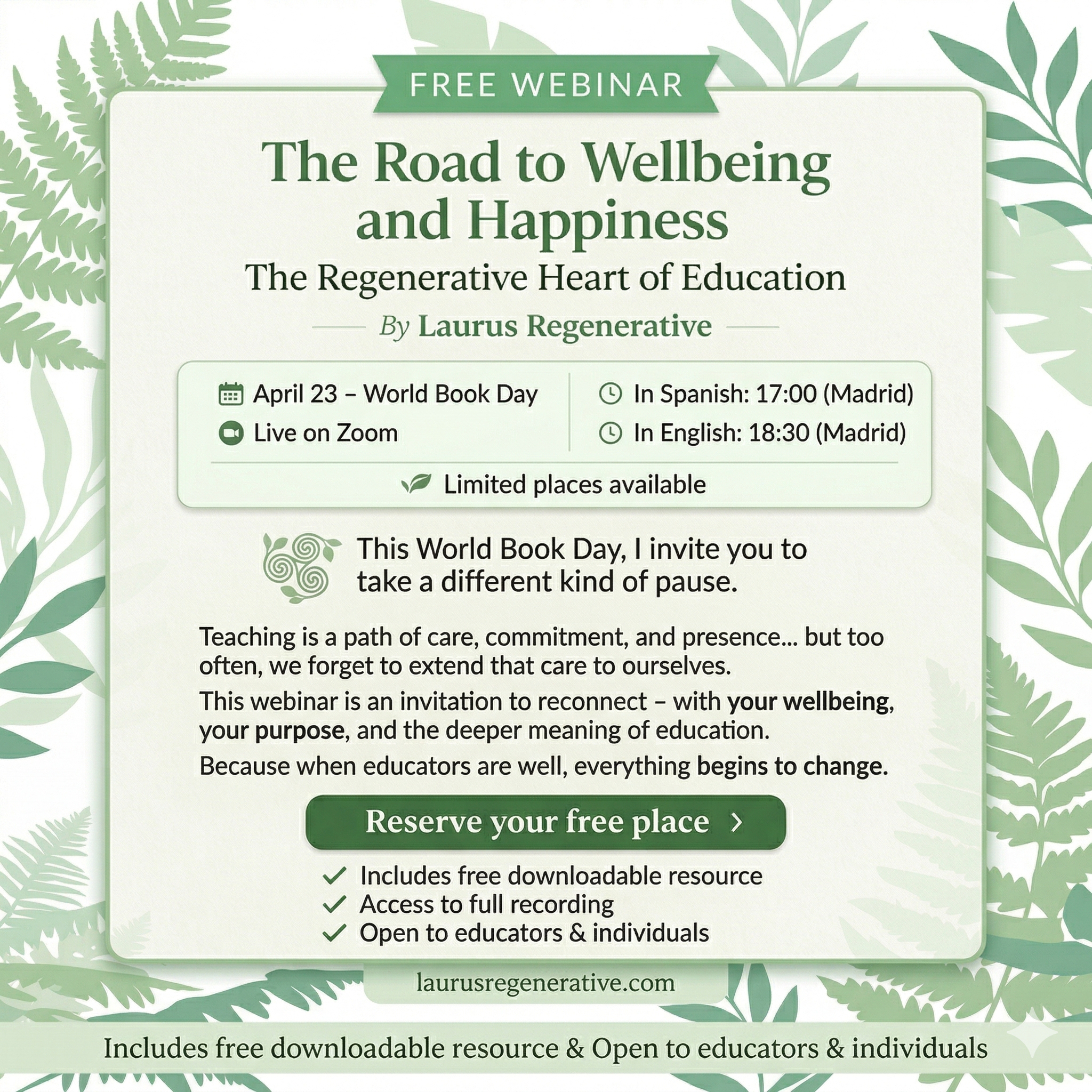
  • Free Webinar 23/04 – World Book Day The Road to Wellbeing and Happiness; The Regenerative Heart of Education

    Free Webinar 23/04 – World Book Day The Road to Wellbeing and Happiness; The Regenerative Heart of Education

    Feeling overwhelmed as an educator?
    This World Book Day, gift yourself a moment to breathe, reset, and reconnect

    FREE Webinar

    “The Road to Wellbeing & Happiness: The Regenerative Heart of Education.”

    Discover how the 5 Principles of Regeneration can help you:
    • Reduce stress
    • Reconnect with your purpose
    • Bring wellbeing into your school

    Free resources + recording included

    Save your spot now! subscribepage.io/mW5Gc9

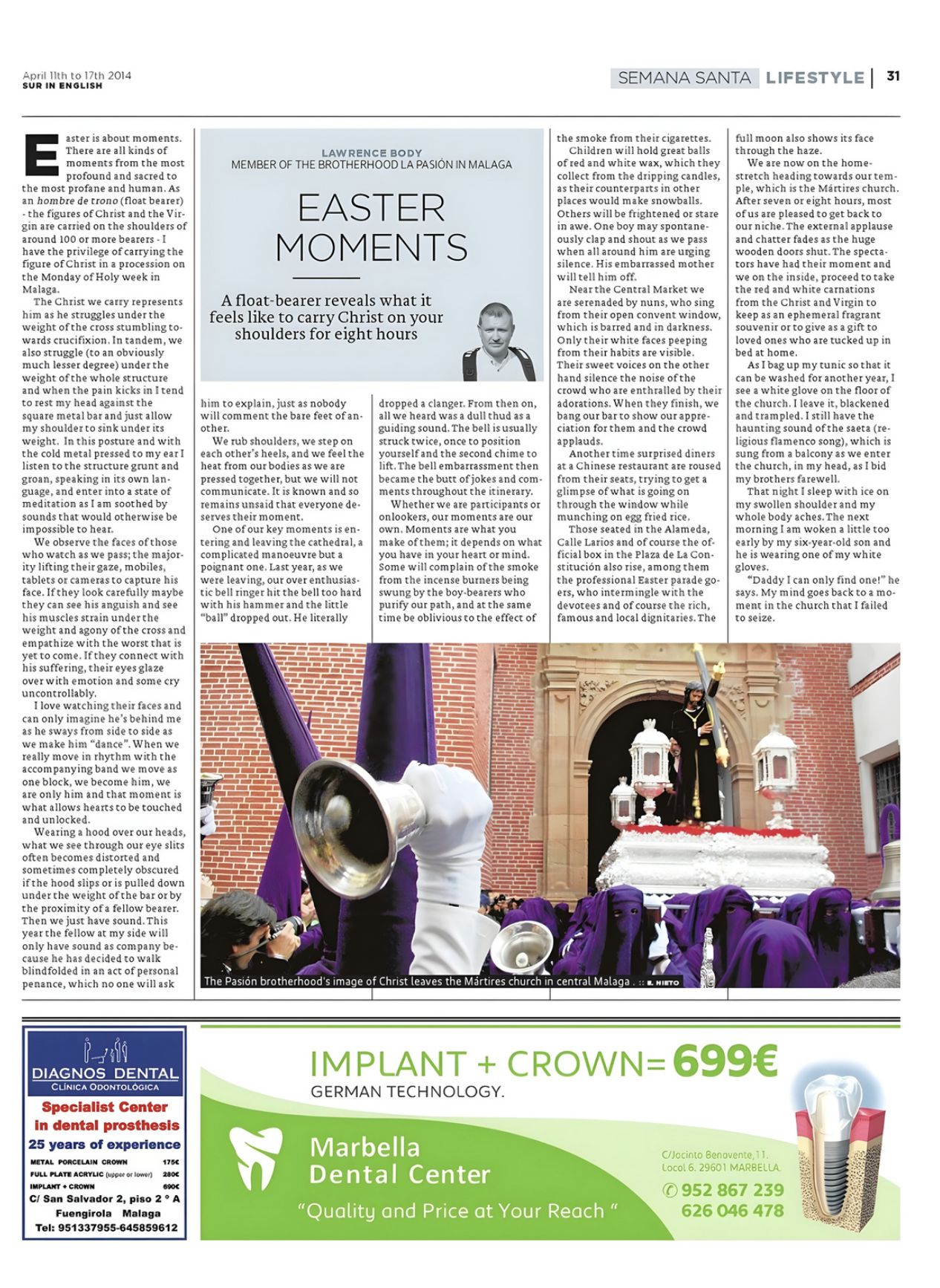
  • When Weight Becomes Presence: A Holy Week Experience

    When Weight Becomes Presence: A Holy Week Experience

    In this article, I share an experience that deeply shaped the way I understand Holy Week. For hours, I carried the image of Christ on my shoulders through the streets of Málaga, feeling not only the physical weight, but also the silence, the emotion, and the connection with those walking beside me. It was a moment that allowed me to observe suffering, faith, and presence from a deeply personal and human place.

    More than a tradition, for me it became an opportunity to live the experience with awareness.

    If this resonates with you, I invite you to take a moment to go deeper into the experience.

  •  Regenerative Education: A Framework for Thriving Schools

     Regenerative Education: A Framework for Thriving Schools

     Regenerative Education: A Framework for Thriving Schools

    1. What Is Regenerative Education?

    Regenerative education is an emerging approach that goes beyond sustainability. Instead of merely reducing harm, it aims to restore, renew, and enhance the well-being of learners, educators, communities, and ecosystems. It views the school not as a mechanical institution but as a living system, one that develops through relationships, cooperation, diversity, and adaptation. In other words, the same principles that allow natural ecosystems to flourish.

    In this approach, learning is not just about academic achievement. It is about cultivating the human and ecological capacities that make healthy, resilient, and compassionate communities possible

    2. Why It Matters Now

    Schools are facing unprecedented challenges: teacher burnout, student anxiety, social fragmentation, lack of meaning, and disconnection from nature. Traditional improvement models are no longer enough. Regenerative education responds to these challenges by:

    • strengthening teacher well-being and sense of purpose
    • building emotionally intelligent, confident, self-aware learners
    • reconnecting students with nature and community
    • creating learning environments where everyone can flourish
    • preparing young people for a complex, interdependent world

    It aligns closely with the 2030 EU educational priorities, the UN SDGs, and the Andalusian strategic goals for inclusive, high-quality, future-oriented education.

    3. Core Principles of Regenerative Education

    1) Learning as a Living System

    Education is understood as a dynamic ecosystem. This means promoting:

    • cooperation rather than competition
    • diversity of perspectives
    • self-organization and student agency
    • flexible, adaptive learning environments

    Teachers are facilitators of growth, not mere transmitters of content.

    2) Human Flourishing and Well-Being

    Regenerative schools place well-being at the center. This can include:

    • mindfulness practices to reduce stress and improve focus
    • emotional intelligence skills for self-awareness and social harmony
    • compassionate communication and conflict resolution
    • supportive environments that prevent burnout

    A thriving teacher is the foundation of a thriving school.

    3) Connection with Nature and Place

    Nature is not an occasional field trip; it needs to become our guide. Through activities like forest schools, outdoor experiential learning in school gardens and biomimicry-inspired activities, students develop:

    • ecological literacy
    • sensory awareness
    • creativity and problem-solving skills
    • a sense of belonging to the natural world

    These experiences have clear benefits for attention, mood, motivation, and inclusion.

    4) Systems Thinking and Regenerative Leadership

    Regenerative education helps learners see the world as interconnected. Students and teachers learn to:

    • recognize patterns and feedback loops
    • understand complexity
    • develop solutions that support the whole system
    • lead collaboratively and ethically

    This prepares them for a rapidly changing social and technological landscape.

    5) Learning That Serves Community and Purpose

    Regenerative education connects learning with real-world challenges, community needs, and personal meaning and through participatory projects students can develop:

    • communication in multiple languages
    • creativity and innovation
    • critical thinking
    • empathy and civic responsibility

    This approach fosters a culture of contribution and belonging.

    Case studies

    Educating for Regeneration: Schools as Living Systems of Hope

    In a time marked by uncertainty, fragmentation, and growing pressure on educational communities, regenerative education offers something profoundly needed: a return to life-centred learning. It invites us to move beyond systems that merely endure, toward schools that restore, reconnect, and regenerate — places where children, teachers, families, and communities can truly flourish.

    Regenerative education is not an abstract theory or a distant ideal. It is already alive in schools that dare to reimagine what education can be when relationships, wellbeing, creativity, and connection to place are placed at the heart of learning.

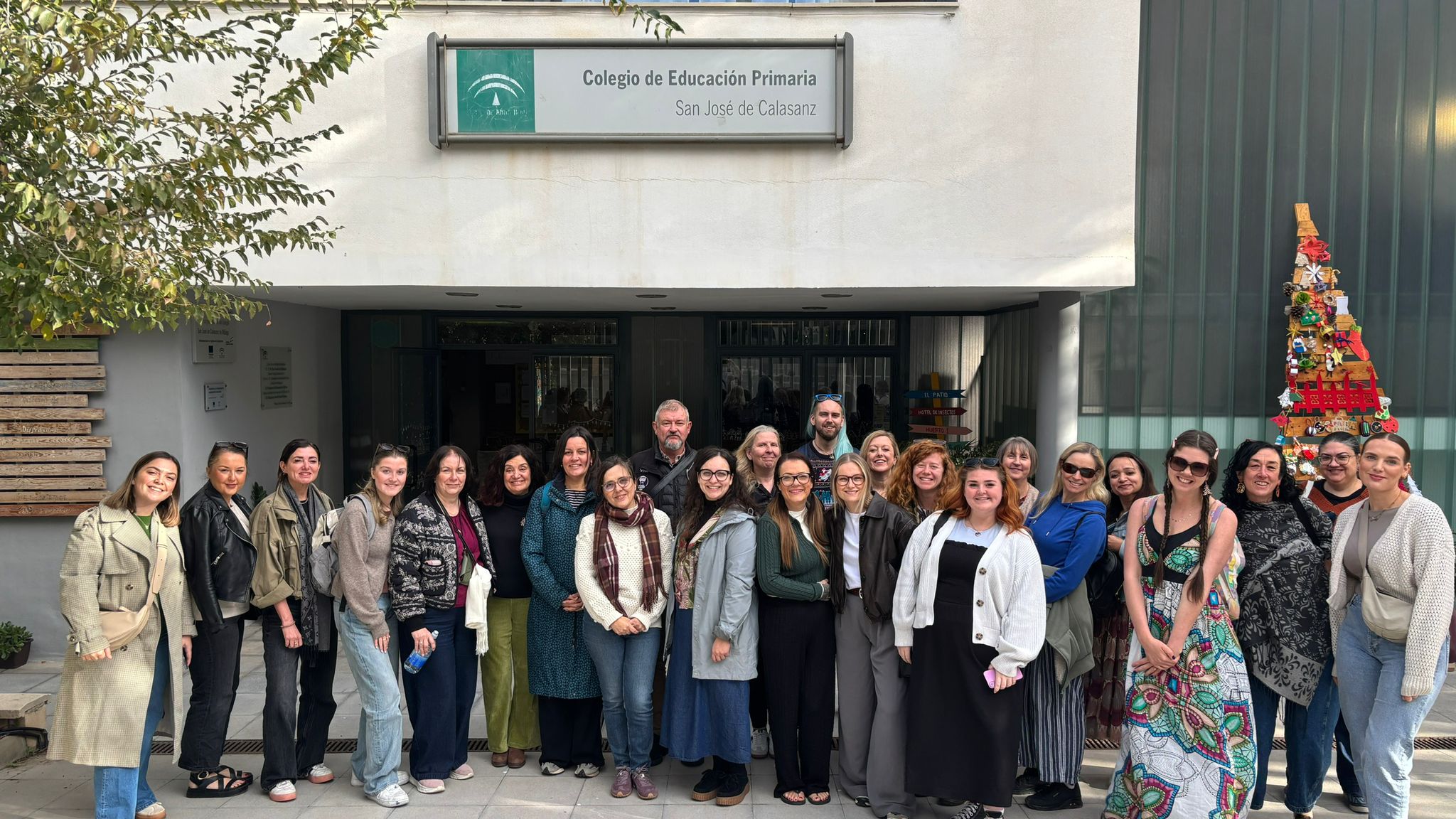
    CEIP San José de Calasanz (Málaga) stands as a living example of this possibility. Over eight years, the school has evolved into a thriving educational ecosystem, where physical spaces, pedagogy, and community life are deeply interwoven. Classrooms extend into corridors and gardens; learning is embodied through art, ceramics, storytelling, and history made visible; and the school itself functions as a shared living space that adapts to the needs of its people. Families are not visitors but partners. Inclusion is not a policy but a daily practice. Care for children extends beyond the timetable, recognising the realities of modern life and supporting families with compassion and dignity. This is regeneration in action — a school that does not simply transmit knowledge, but cultivates belonging, agency, and collective care.

    At CEIP Daidín (Benahavís), regeneration begins from within. Emotional intelligence, wellbeing, and relational awareness form the foundation of school life. Teachers are equipped not only with pedagogical tools, but with emotional literacy and reflective practices that enable them to support both themselves and their pupils. Children learn to name, understand, and regulate emotions, developing resilience and empathy from an early age. Through participatory leadership, student voice, and everyday practices of gratitude and listening, the school nurtures a culture where every individual feels seen and valued. Here, regeneration unfolds through relationships — quiet, consistent, and deeply transformative.

    Conclusion

    We need to remind ourselves that education is a living system, shaped by context, culture, relationships, and care. When we support educators to lead regeneratively with mindfulness, emotional intelligence, systems thinking, and inspiration drawn from nature, schools become places that not only prepare students for the future, but actively heal and regenerate the present.

    This is the vision at the heart of our proposal and we want to work alongside our partners; to empower educators as regenerative leaders; to reconnect learning with real life skills and needs; to cultivate wellbeing, inclusion, and creativity, and; to design educational cultures that are wise, compassionate, and alive.

    By sharing practices, building transnational learning communities, and honouring the wisdom already present in our schools, we plant seeds for a more humane and regenerative educational future;one where schools are not simply institutions, but roots of transformation within their communities.

    Education, when nurtured with care and intention, has the power not only to sustain, but to regenerate.