Erasmus+  Courses KA1 •  Online Training •   Invited Expert •  KA2

Etiqueta: Education

  • What Mindfulness Really Does to Teachers: The Science Behind the PINEP Programme

    What Mindfulness Really Does to Teachers: The Science Behind the PINEP Programme

    Research · Mindfulness · Emotional Intelligence · Education

    What Mindfulness Really Does to Teachers: The Science Behind the PINEP Programme

    A study with 180 teachers from Málaga reveals statistically significant improvements across emotional intelligence, life satisfaction, and wellbeing — after just 8 weeks.

    We talk a great deal about teacher wellbeing. But what does the evidence actually say? What happens , measurably, statistically, when teachers practise Mindfulness in a structured, emotionally intelligent way over a sustained period of time?

    This research poster, presented at the II Congress of Mindfulness in Education in Zaragoza (2019), answers exactly that question. The study was conducted by Lawrence Body alongside researchers Natalio Ramos, Olivia Recondo, and Óscar Jiménez from the University of Málaga — and the results speak for themselves.

    Mindfulness, when integrated with emotional intelligence training, doesn’t just improve how teachers feel — it changes how they teach, how they relate, and how they lead in the classroom.
    — Conclusion, PINEP Research Study, University of Málaga

    What is PINEP?

    The Programa de Inteligencia Emocional Plena (PINEP) (Full Emotional Intelligence Programme) was developed by Ramos, Recondo and Enríquez (2012). It combines foundational Mindfulness training with structured emotional intelligence development, creating a flexible and open framework that can be adapted to different educational and professional contexts.

    Unlike purely contemplative approaches, PINEP is designed to bring participants into direct, compassionate contact with their own emotional experience, both positive and negative, building autonomy in decision/making and moving beyond automatic, conditioned responses.

    How the study was conducted

    The study followed a pre-post design with a control group, evaluating participants before and after 8 weeks of PINEP training. Teachers came from across the province of Málaga, recruited through the Teacher Training Centres of Málaga and Marbella-Coín. The sample was 80% women and 20% men, aged between 25 and 65, spanning primary, secondary, vocational, and guidance education.

    Participants

    • 80% women, 20% men
    • Ages 25–65 (avg. 41–50)
    • 70% over 10 years’ experience
    • 44% primary education
    • 37% secondary & sixth form
    • 13% guidance & pedagogy
    • 6% vocational training

    Instruments used

    • Wong & Law EI Scale (2002)
    • Satisfaction With Life Scale (Diener et al., 1985)
    • Self-Other Four Immeasurables (Kraus & Sears, 2009)
    • Emociones Plenas (Ramos & Recondo, 2014)

    What changed — and how significantly

    The experimental group — those who completed the PINEP programme — showed statistically significant improvements across 11 different variables, while the control group showed no meaningful changes. Here is what improved:

    Statistically significant improvements in the experimental group

    • Intrapersonal perception  • Interpersonal perception  • Emotional assimilation

    • Emotional regulation  • Total emotional intelligence  • Life satisfaction

    • Psychophysical health  • Positive personal relationships  • Mindfulness changes

    • Changes in the classroom  • Changes in the teacher

    Among the most striking results: Emotional Regulation showed a t-value of 6.9 (p<0.001), Life Satisfaction reached 6.4 (p<0.001), and Mindfulness changes scored 7.2 (p<0.001) — all highly significant results, pointing to real, measurable transformation in how teachers experience and manage their inner world.

    What this means for education

    These findings matter beyond the statistics. When a teacher improves their emotional regulation, their students feel it. When they develop greater intrapersonal awareness, the classroom culture shifts. When their life satisfaction increases, their vocation becomes sustainable.

    The study confirms what many educators already sense intuitively: that Mindfulness and Emotional Intelligence are not extras — they are foundations. And when delivered through a structured, evidence-based programme like PINEP, the results are not just felt — they can be measured.

    Download the research poster

    We are making this research poster freely available to anyone who wants to explore the evidence, share it with colleagues, or use it as a starting point for conversations about wellbeing in their own institution. It presents the full study — objectives, methodology, results, and conclusions — in a clear and accessible format.

    Download the Research Poster — the full PINEP study on Mindfulness, Emotional Intelligence, and teacher wellbeing. Free to download and share.
    Download the free research poster →

  • When Wellbeing and Language Learning Meet: A Free Resource for Educators

    When Wellbeing and Language Learning Meet: A Free Resource for Educators

    Resources · Mindfulness · Education · Languages

    When Wellbeing and Language Learning Meet: A Free Resource for Educators

    What happens when Mindfulness, Emotional Intelligence, and English come together in the same classroom? Something extraordinary.

    At Laurus, we believe that the most powerful learning happens when the whole person is present — not just the intellect. That’s the idea behind a pioneering programme we developed for teaching staff at the University of Málaga (UMA): an integrated experience that brings together English language learning, Mindfulness practice, and Emotional Intelligence under one roof.

    The results have been remarkable. And today, we want to share them with you — completely free.

    “A course applicable to improvement and growth at different levels: personal, in relationships with colleagues, and in improving teaching practice.”
    — Programme participant, University of Málaga

    What is this experience?

    The programme was designed to respond to a growing need in higher education: how to support the wellbeing of teaching staff while also strengthening bilingual communication skills. Participants attend weekly two-hour sessions over 12, 15, or 25 weeks, depending on the format they choose.

    Using CLIL methodology (Content and Language Integrated Learning) and the theory of Multiple Intelligences, each session weaves English language practice with Mindfulness exercises, meditation, reflective journaling, and interpersonal dynamics. Everything is designed so that what is learned in the classroom can be transferred directly into professional and personal life.

    What do participants walk away with?

    Each person leaves with a personalised Mindfulness project — a concrete plan for how they will integrate these practices into their own teaching context. Many have gone on to pioneer Mindfulness initiatives within their faculties and departments.

    The programme consistently reaches near-full satisfaction scores. Wellbeing, professional application of skills, and meeting expectations all scored above 3.6 out of 4. There is regularly a waiting list to join.

    Why are we sharing this?

    Because we believe that good ideas should travel. This resource — presented as a poster at the II Congress of Mindfulness in Education in Zaragoza — summarises the full experience: its objectives, methodology, results, and conclusions. It’s a compact but complete window into what regenerative, holistic education can look like in practice.

    Whether you are a teacher, an educational leader, a trainer, or simply someone curious about integrating wellbeing into learning environments, this poster offers both inspiration and a practical framework.

    Your free download is waiting

    No course to sign up to. No prerequisites. Just a beautifully condensed resource that might spark your next idea, your next conversation, or your next project.

    Download the Experience Poster — a free resource summarising this pioneering programme in Mindfulness, English, and Emotional Intelligence for educators.

    Download the free poster →

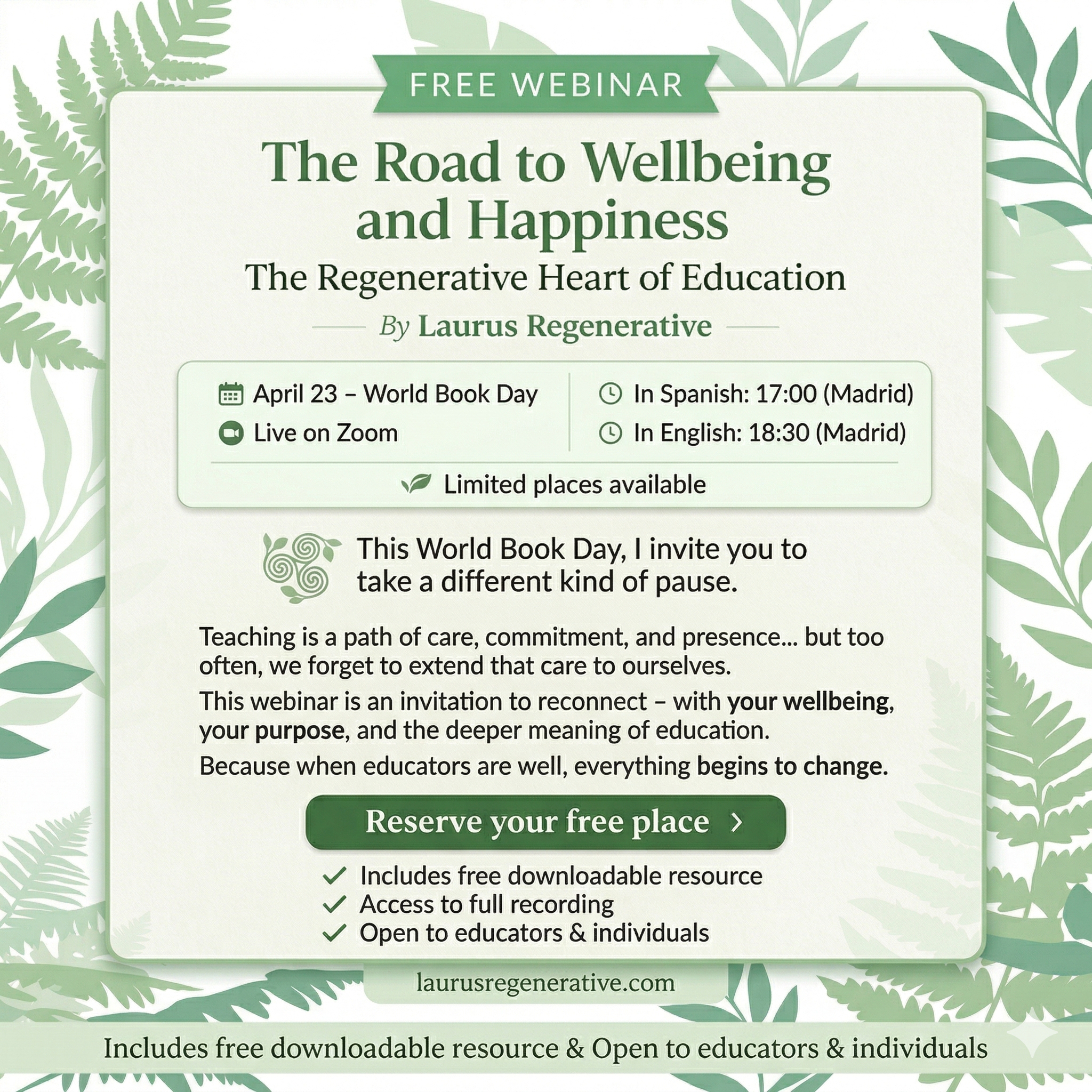
  • Free Webinar 23/04 – World Book Day The Road to Wellbeing and Happiness; The Regenerative Heart of Education

    Free Webinar 23/04 – World Book Day The Road to Wellbeing and Happiness; The Regenerative Heart of Education

    Feeling overwhelmed as an educator?
    This World Book Day, gift yourself a moment to breathe, reset, and reconnect

    FREE Webinar

    “The Road to Wellbeing & Happiness: The Regenerative Heart of Education.”

    Discover how the 5 Principles of Regeneration can help you:
    • Reduce stress
    • Reconnect with your purpose
    • Bring wellbeing into your school

    Free resources + recording included

    Save your spot now! subscribepage.io/mW5Gc9

  •  Regenerative Education: A Framework for Thriving Schools

     Regenerative Education: A Framework for Thriving Schools

     Regenerative Education: A Framework for Thriving Schools

    1. What Is Regenerative Education?

    Regenerative education is an emerging approach that goes beyond sustainability. Instead of merely reducing harm, it aims to restore, renew, and enhance the well-being of learners, educators, communities, and ecosystems. It views the school not as a mechanical institution but as a living system, one that develops through relationships, cooperation, diversity, and adaptation. In other words, the same principles that allow natural ecosystems to flourish.

    In this approach, learning is not just about academic achievement. It is about cultivating the human and ecological capacities that make healthy, resilient, and compassionate communities possible

    2. Why It Matters Now

    Schools are facing unprecedented challenges: teacher burnout, student anxiety, social fragmentation, lack of meaning, and disconnection from nature. Traditional improvement models are no longer enough. Regenerative education responds to these challenges by:

    • strengthening teacher well-being and sense of purpose
    • building emotionally intelligent, confident, self-aware learners
    • reconnecting students with nature and community
    • creating learning environments where everyone can flourish
    • preparing young people for a complex, interdependent world

    It aligns closely with the 2030 EU educational priorities, the UN SDGs, and the Andalusian strategic goals for inclusive, high-quality, future-oriented education.

    3. Core Principles of Regenerative Education

    1) Learning as a Living System

    Education is understood as a dynamic ecosystem. This means promoting:

    • cooperation rather than competition
    • diversity of perspectives
    • self-organization and student agency
    • flexible, adaptive learning environments

    Teachers are facilitators of growth, not mere transmitters of content.

    2) Human Flourishing and Well-Being

    Regenerative schools place well-being at the center. This can include:

    • mindfulness practices to reduce stress and improve focus
    • emotional intelligence skills for self-awareness and social harmony
    • compassionate communication and conflict resolution
    • supportive environments that prevent burnout

    A thriving teacher is the foundation of a thriving school.

    3) Connection with Nature and Place

    Nature is not an occasional field trip; it needs to become our guide. Through activities like forest schools, outdoor experiential learning in school gardens and biomimicry-inspired activities, students develop:

    • ecological literacy
    • sensory awareness
    • creativity and problem-solving skills
    • a sense of belonging to the natural world

    These experiences have clear benefits for attention, mood, motivation, and inclusion.

    4) Systems Thinking and Regenerative Leadership

    Regenerative education helps learners see the world as interconnected. Students and teachers learn to:

    • recognize patterns and feedback loops
    • understand complexity
    • develop solutions that support the whole system
    • lead collaboratively and ethically

    This prepares them for a rapidly changing social and technological landscape.

    5) Learning That Serves Community and Purpose

    Regenerative education connects learning with real-world challenges, community needs, and personal meaning and through participatory projects students can develop:

    • communication in multiple languages
    • creativity and innovation
    • critical thinking
    • empathy and civic responsibility

    This approach fosters a culture of contribution and belonging.

    Case studies

    Educating for Regeneration: Schools as Living Systems of Hope

    In a time marked by uncertainty, fragmentation, and growing pressure on educational communities, regenerative education offers something profoundly needed: a return to life-centred learning. It invites us to move beyond systems that merely endure, toward schools that restore, reconnect, and regenerate — places where children, teachers, families, and communities can truly flourish.

    Regenerative education is not an abstract theory or a distant ideal. It is already alive in schools that dare to reimagine what education can be when relationships, wellbeing, creativity, and connection to place are placed at the heart of learning.

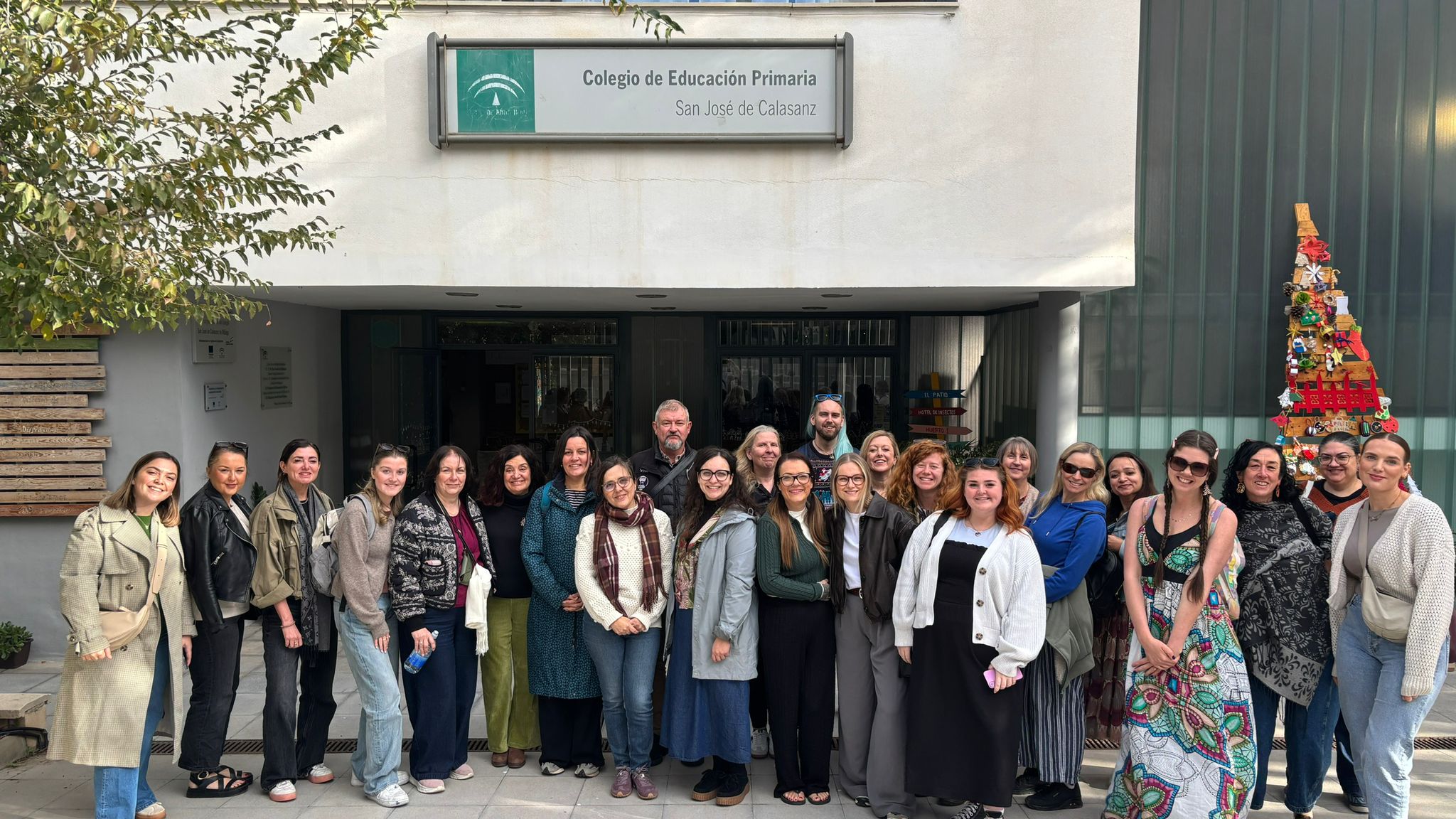
    CEIP San José de Calasanz (Málaga) stands as a living example of this possibility. Over eight years, the school has evolved into a thriving educational ecosystem, where physical spaces, pedagogy, and community life are deeply interwoven. Classrooms extend into corridors and gardens; learning is embodied through art, ceramics, storytelling, and history made visible; and the school itself functions as a shared living space that adapts to the needs of its people. Families are not visitors but partners. Inclusion is not a policy but a daily practice. Care for children extends beyond the timetable, recognising the realities of modern life and supporting families with compassion and dignity. This is regeneration in action — a school that does not simply transmit knowledge, but cultivates belonging, agency, and collective care.

    At CEIP Daidín (Benahavís), regeneration begins from within. Emotional intelligence, wellbeing, and relational awareness form the foundation of school life. Teachers are equipped not only with pedagogical tools, but with emotional literacy and reflective practices that enable them to support both themselves and their pupils. Children learn to name, understand, and regulate emotions, developing resilience and empathy from an early age. Through participatory leadership, student voice, and everyday practices of gratitude and listening, the school nurtures a culture where every individual feels seen and valued. Here, regeneration unfolds through relationships — quiet, consistent, and deeply transformative.

    Conclusion

    We need to remind ourselves that education is a living system, shaped by context, culture, relationships, and care. When we support educators to lead regeneratively with mindfulness, emotional intelligence, systems thinking, and inspiration drawn from nature, schools become places that not only prepare students for the future, but actively heal and regenerate the present.

    This is the vision at the heart of our proposal and we want to work alongside our partners; to empower educators as regenerative leaders; to reconnect learning with real life skills and needs; to cultivate wellbeing, inclusion, and creativity, and; to design educational cultures that are wise, compassionate, and alive.

    By sharing practices, building transnational learning communities, and honouring the wisdom already present in our schools, we plant seeds for a more humane and regenerative educational future;one where schools are not simply institutions, but roots of transformation within their communities.

    Education, when nurtured with care and intention, has the power not only to sustain, but to regenerate.

  • Teacher training in well-being and mindfulness (Malaga)

    Teacher training in well-being and mindfulness (Malaga)

    Teacher training in well-being and mindfulness: a regenerative experience in Malaga with teachers from Wales

    A Week to Regenerate Education Through Well-being

    Mindfulness and Teacher Well-being Training in Málaga

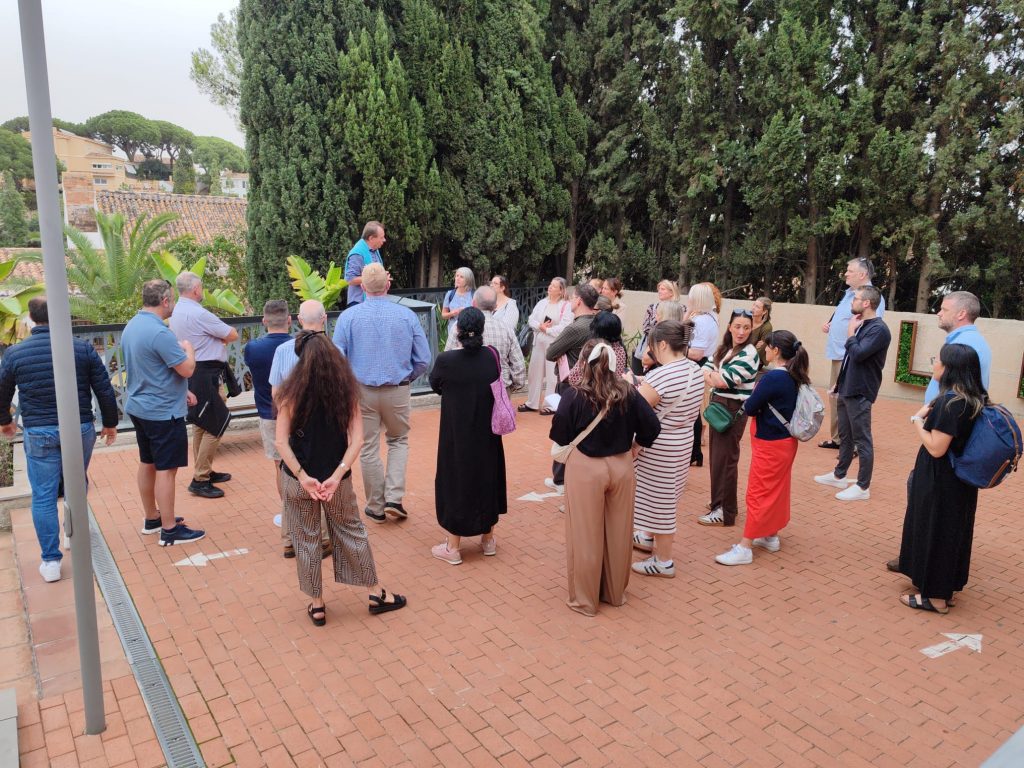
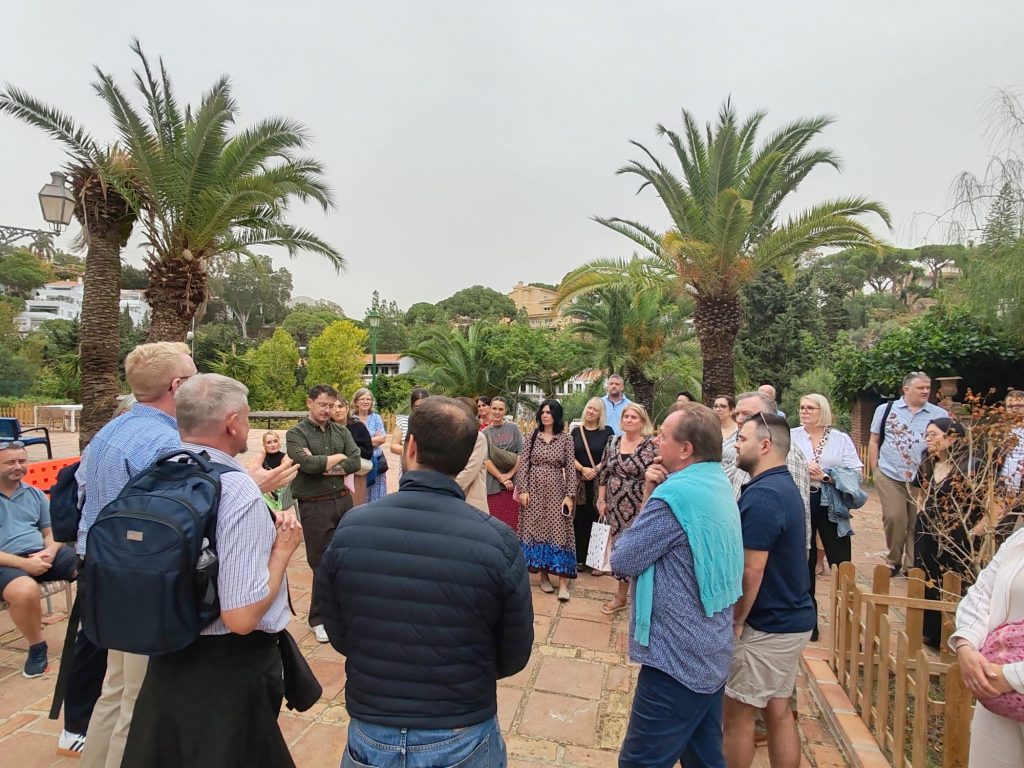
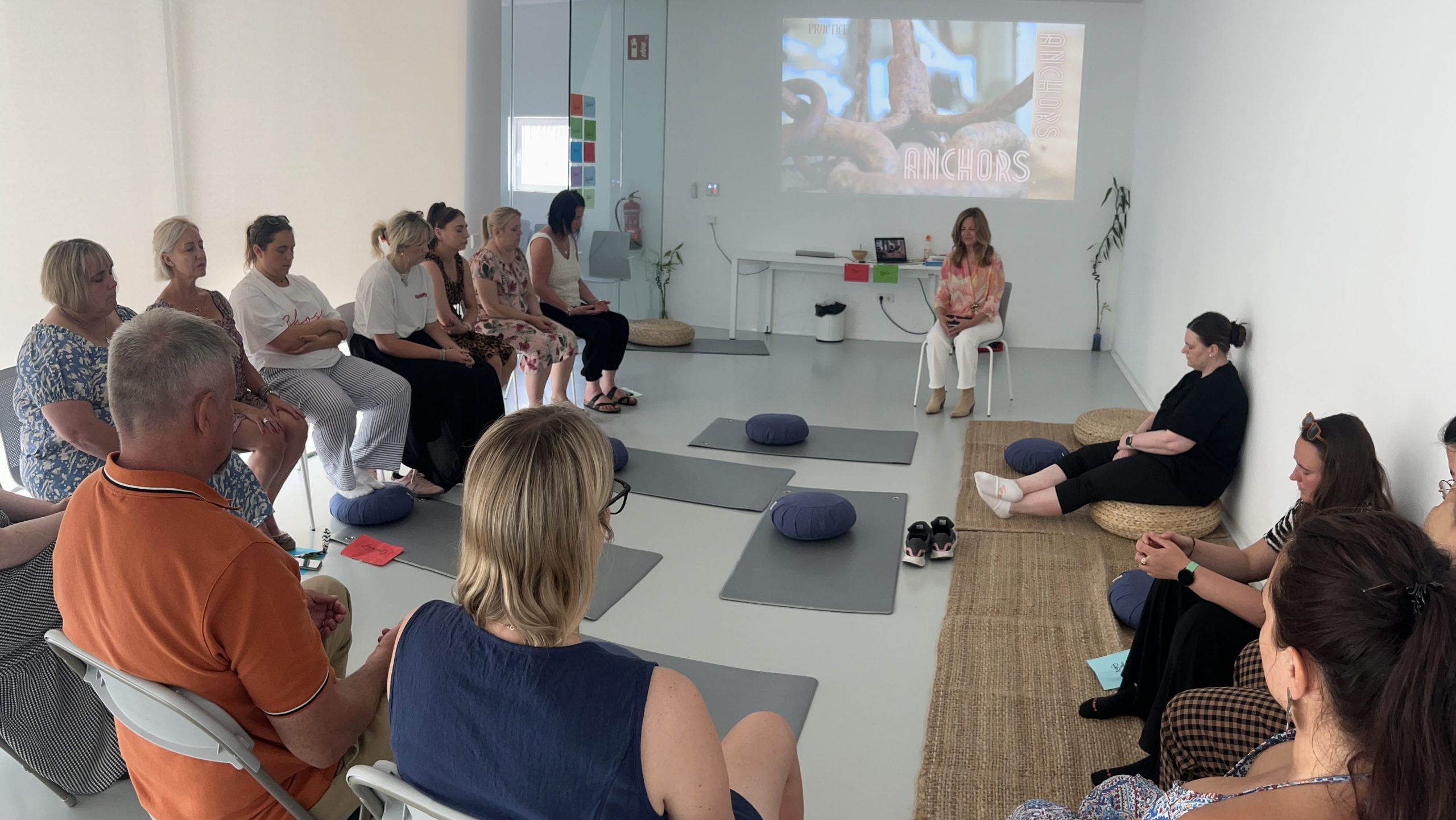
    During the week of December 2-5, Málaga hosted an international teacher training experience focused on well-being, mindfulness, and regenerative education. A group of 21 teachers from Wales participated in an intensive program that combined professional development, personal reflection, and connection to real-world educational practice.

    The training was offered by Accipe and funded by Taith, in collaboration with ILG and Cardiff City Council, and was facilitated by Lawrence Body, founder of Laurus Regenerative. The approach integrated mindfulness in education, emotional intelligence, and teacher well-being, combining theory and practice from an experiential perspective.

    Learning from Experience: Mindfulness Applied to Educational Practice

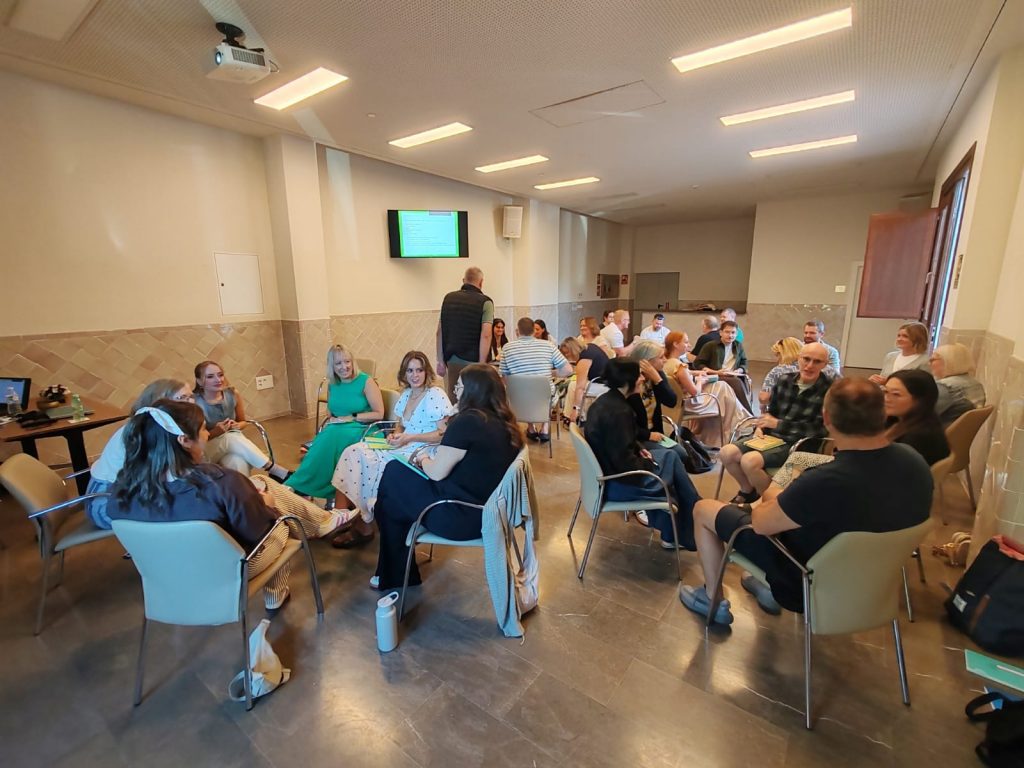
    One of the central elements of the program was experiential learning. Beyond the theoretical content, the training invited participants to examine their own experiences as teachers, reflect on their well-being, and explore how this directly influences the classroom climate and learning processes.

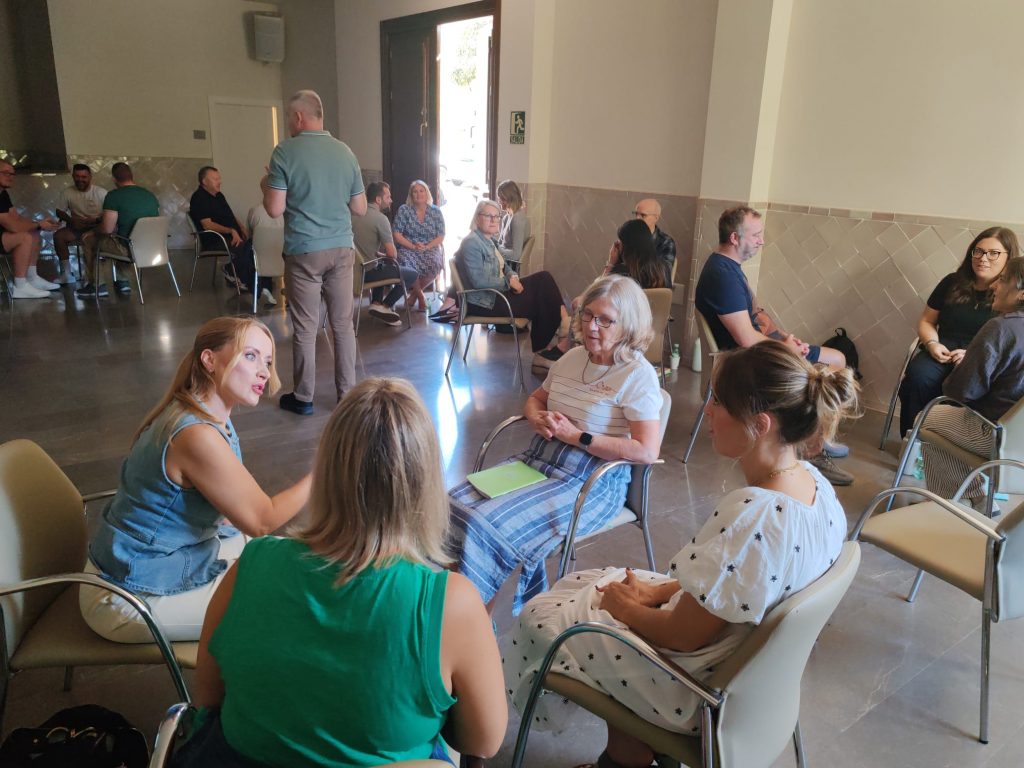
    Through mindfulness practices, group activities, and spaces for conscious dialogue, a safe environment was created for sharing real-life challenges encountered in daily teaching. This approach allowed for a connection between personal well-being and the quality of education and student support.

    The educational center as a space for well-being and transformation

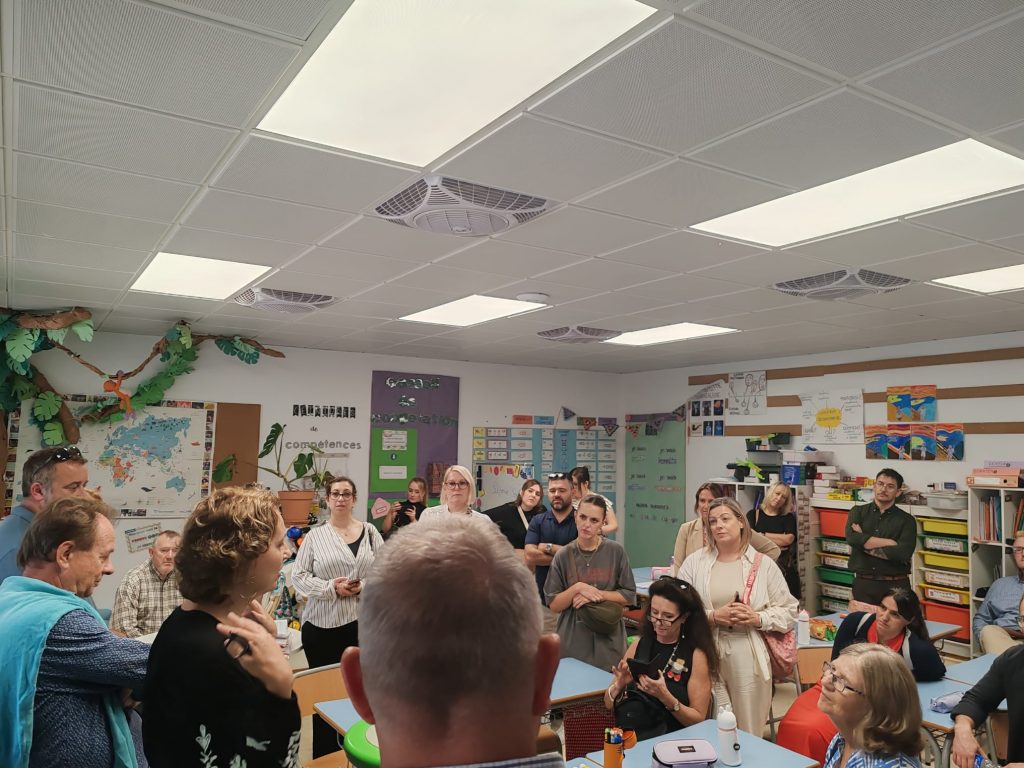
    As part of the program, a visit was made to the San José de Calasanz Primary School in Málaga, where participants spent time with the principal, Carmen Ortiz, the teaching staff, and the students. This experience allowed them to observe how integrating well-being into school life has a profound impact on coexistence, motivation, and learning.

    Beyond academic results, it was possible to see how an education that cares for people creates more humane, coherent, and sustainable school environments.

    Well-being and Regenerative Education at the University

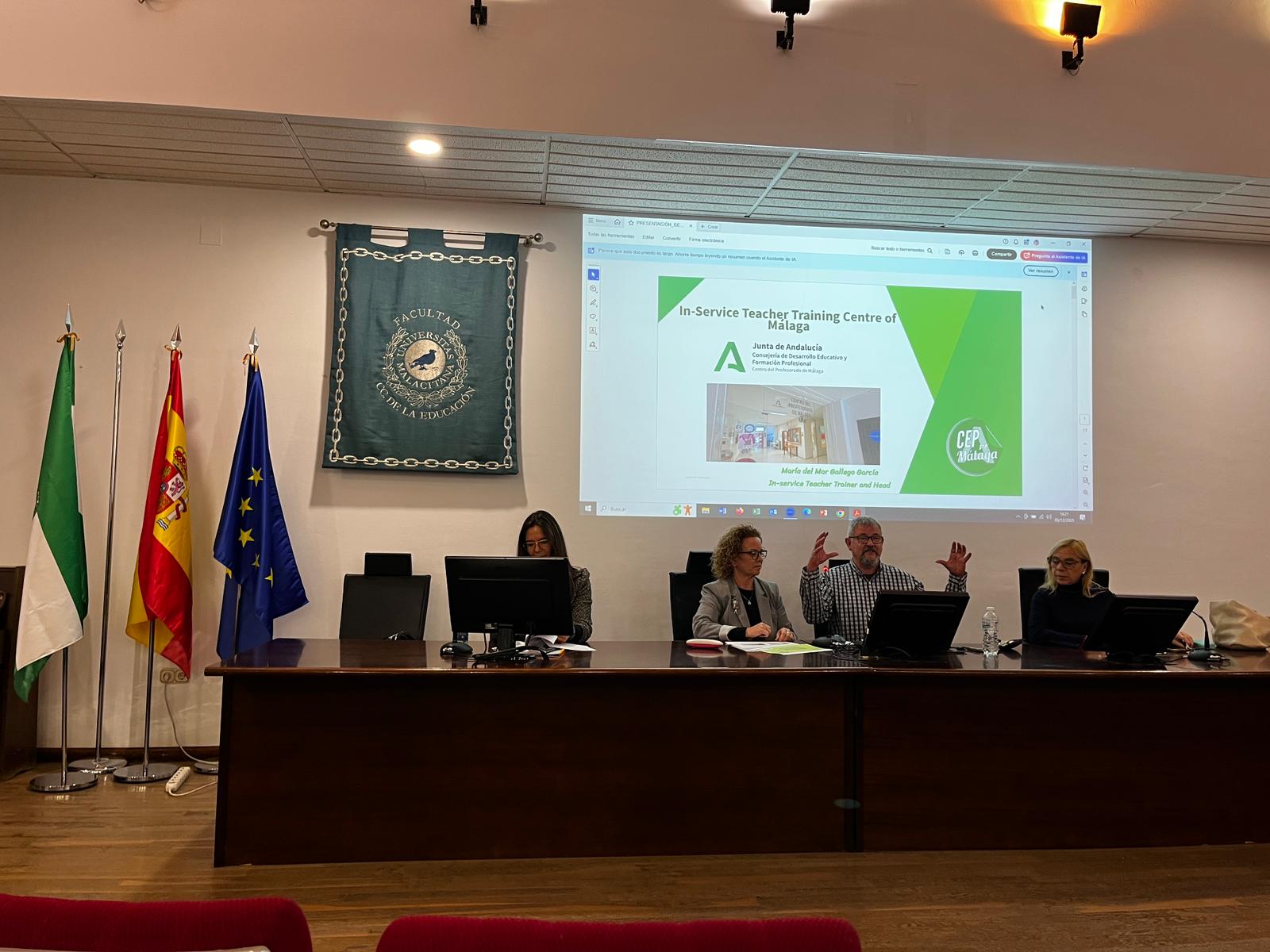
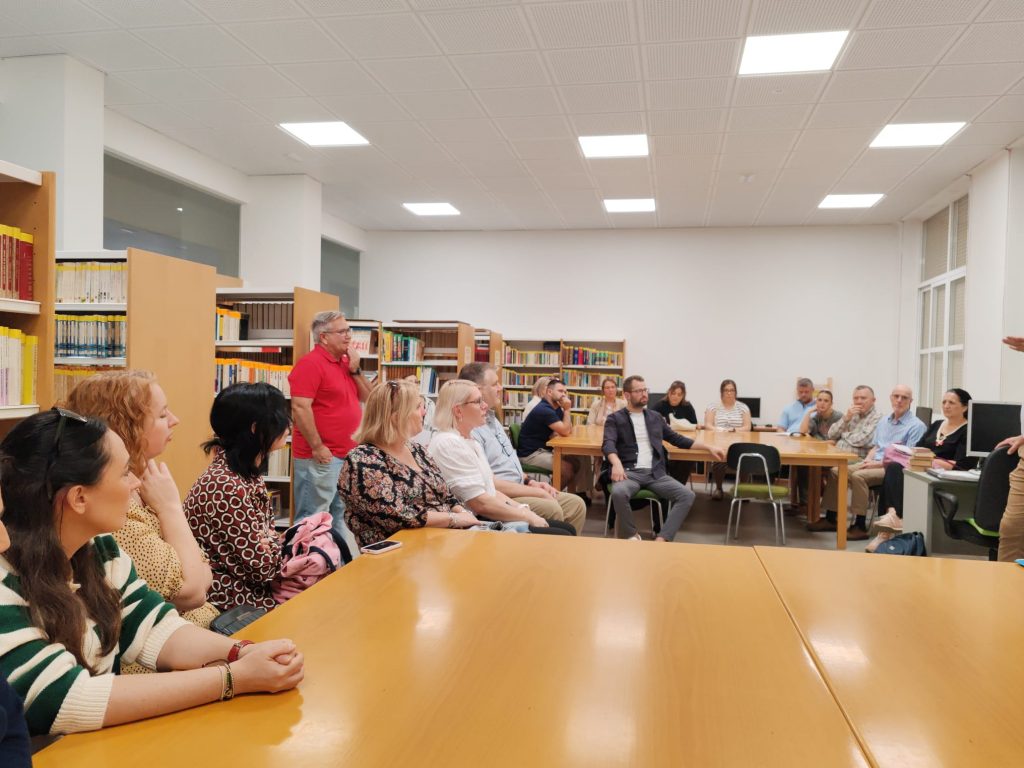
    The training week included a conference at the Faculty of Education Sciences of the University of Málaga, hosted by Amparo Civila, Vice Dean of Mobility and International Relations. This meeting brought together professionals from different educational contexts and fostered the exchange of experiences at an international level.

    The speakers included María del Mar Gallego, Director of the Málaga Teacher Training Center (CEP); Gemma Muñoz, from the Daidín Primary School in Benahavís; and Kate Martin, Head of the Well-being Curriculum for Cardiff City Council. Rocío González, Professor of Education at the University of Málaga; and Lawrence Body, who shared Laurus Regenerative’s perspective on well-being, regeneration, and mindful education.

    The presentations offered practical examples of how to integrate well-being into real educational contexts, respecting the rhythms, needs, and realities of both teachers and students.

    Regenerative Education: Caring to Transform

    This teacher training experience in well-being highlighted that educational transformation begins in the everyday. In the way we relate to one another, in how we care for those who teach, and in creating spaces where it is possible to pause, breathe, and reconnect with the purpose of educating.

    At Laurus Regenerative, we believe that supporting teachers in this process is a direct path to creating a more mindful, inclusive education that is aligned with current challenges. An education that not only transmits knowledge but also cares, inspires, and regenerates.

    If this approach resonates with you or your school, we would be delighted to continue sharing and building future learning experiences together.

  • Regenerative leadership training for schools in Wales

    Regenerative leadership training for schools in Wales

    Regenerative leadership training for schools in Wales | Regenerative leadership training for schools in Wales

     ________________________

    The week of 11–14 November in Málaga was an exceptional professional learning experience for 29 headteachers and members of senior leadership teams from Wales, thanks to a training programme delivered by Accipe and funded by Taith, in collaboration with ILG and Cardiff City Council. Under the expert guidance of Lawrence Body from Laurus Regenerative SRL, participants deepened their understanding of the latest mindfulness and wellbeing methodologies, both in theory and practice, engaging in a dynamic professional development experience.

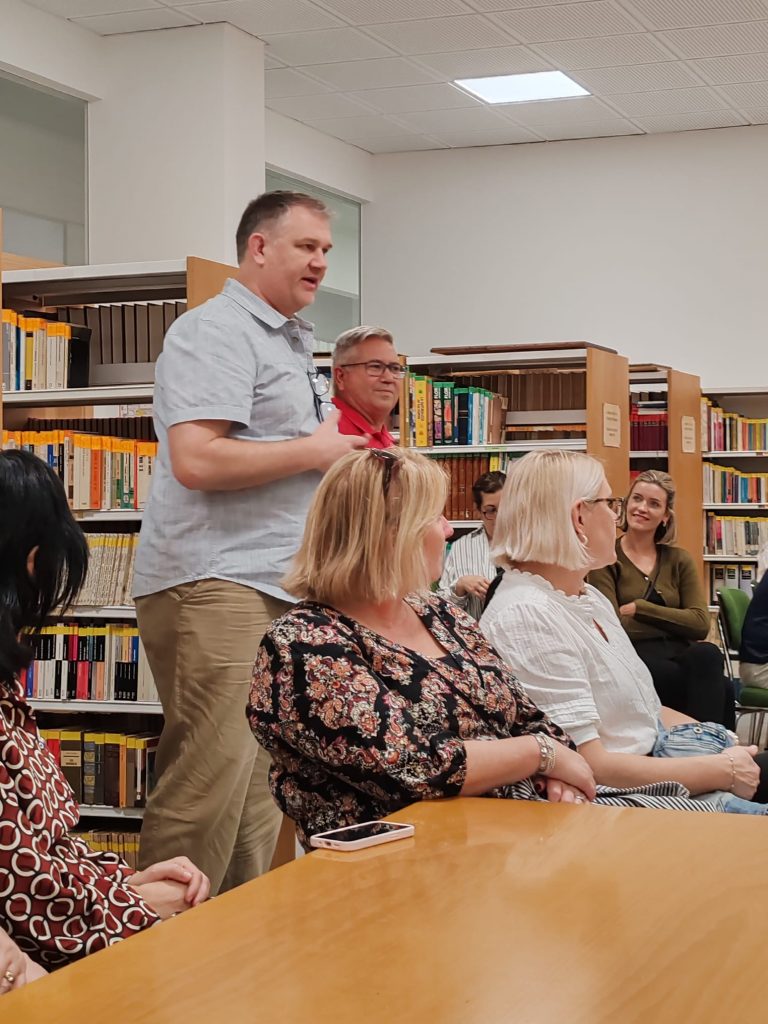
    The school visits and the activities described above took place within this training framework. Speaking with Headteacher Cecilia Manrique and teacher Eduardo Blesa from Colegio de La Asunción, and observing pupils share their personal growth through mindfulness practices, lead medit

    ations, and speak with remarkable maturity about benefits that go beyond the academic, was truly inspiring.

    Following the warm welcome from the headteacher and the ongoing support throughout the visit from Mickael and English teacher Rory, the visit to the Lycée Français offered another valuable learning dimension: teachers explored innovative classroom spaces, learned how translanguaging naturally occurs in the playground, and received insights from teacher Ana on how flexible classroom models inspired by Canada can be used to adapt to students’ needs and foster collaboration and empathy.

    The week also included presentations from guest experts, including Rosa Arcos de Torres, Director of the CEP of Marbella, and teacher and Head of Studies Gemma Muñoz from CEIP Daidín, who offered practical perspectives on how to integrate mindfulness, emotional intelligence, and wellbeing into real school contexts, making the experience motivating and relevant for every participating teacher.

  • The importance of creating a conscious space

    The importance of creating a conscious space

     The Importance of Creating a Mindful Space

    In June 2025, we were fortunate to host a group of Welsh school teachers here in Málaga, in collaboration with our partners ACCIPE: https://accipe.org/  and the Welsh mobility programme TAITH (similar to Erasmus+).

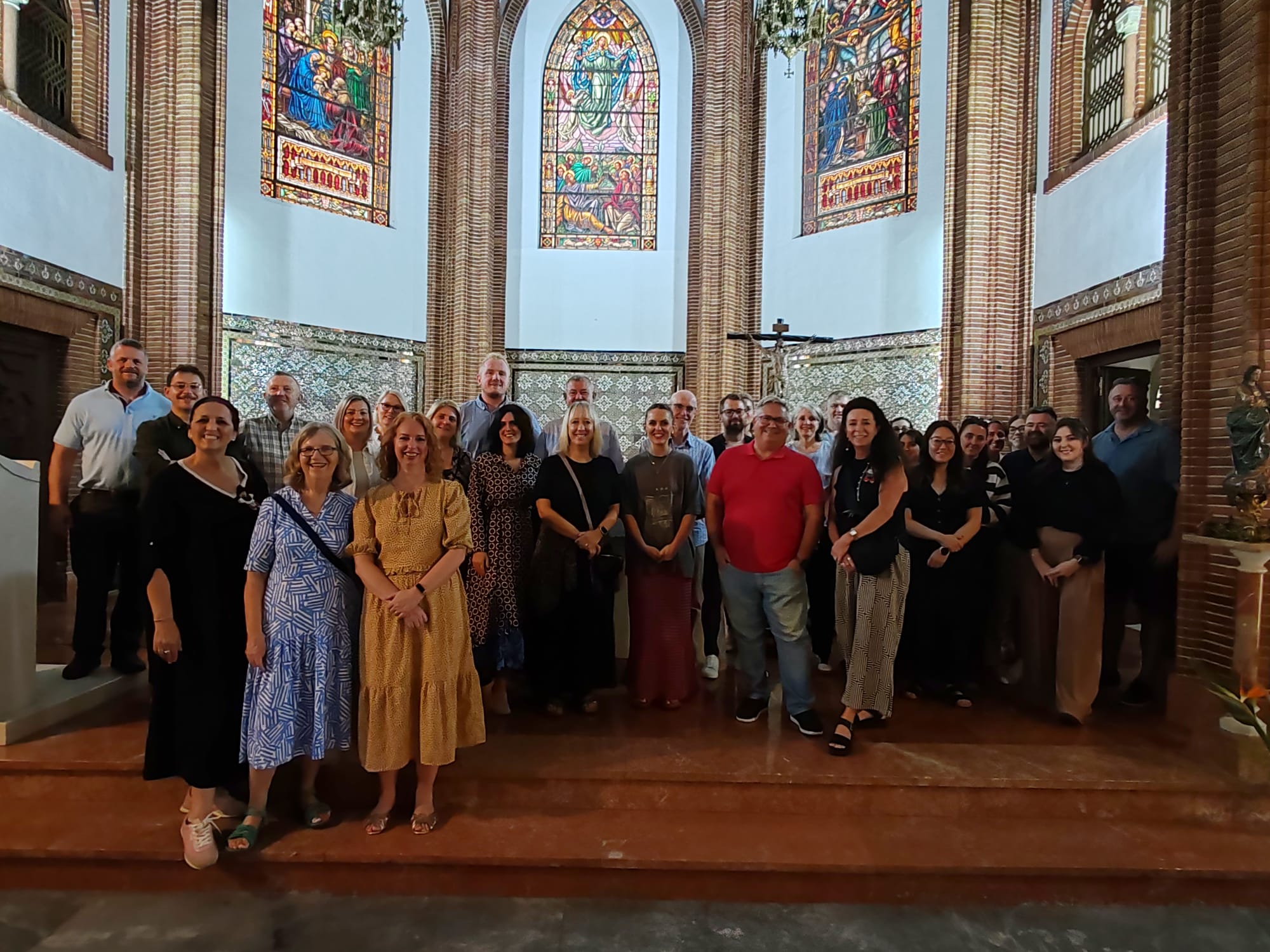
    Málaga is a city that naturally invites mindful reflection. It delights the senses and fosters a sense of well-being, making it an ideal setting for our work together. The teachers stayed at El Seminario (La Casa Diocesana), a beautiful historic building that now hosts training groups focused on spirituality, therapy, or social development. It’s a space perfectly suited to mindfulness courses—one that invites guests to relax, disconnect, and reflect on both personal and professional contexts.

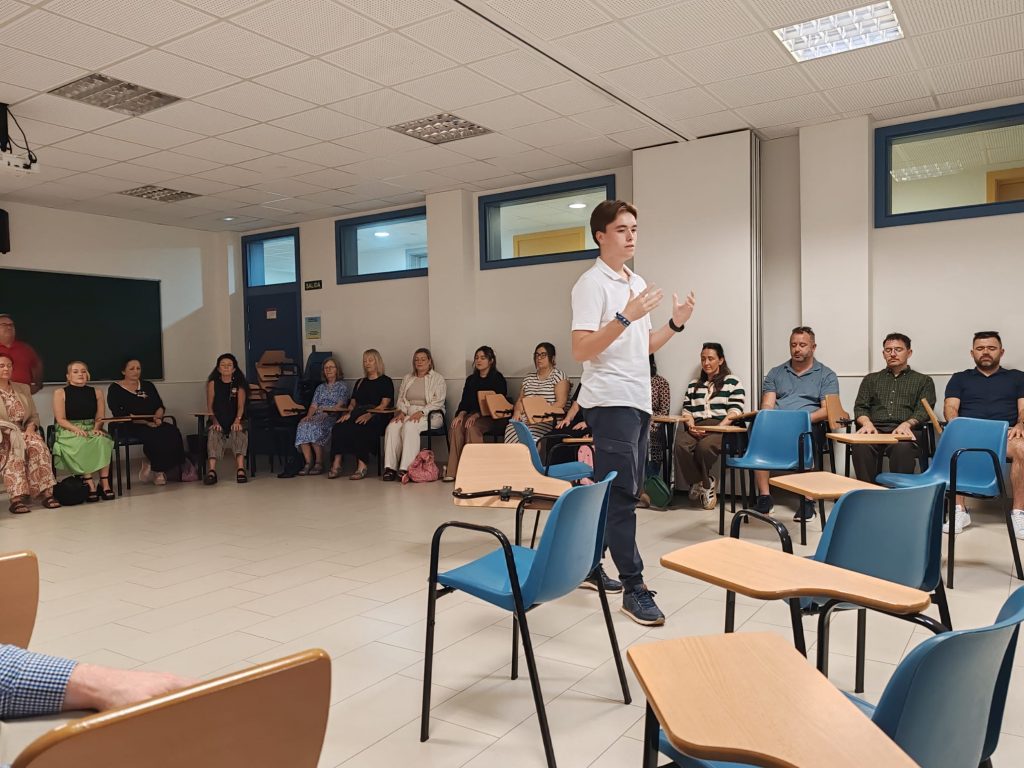
    Throughout the week, we combined daily mindfulness meditation practice with Social and Emotional Learning (SEL) applied to the teachers’ educational realities. The aim was to promote regeneration by engaging participants’ critical thinking and creativity, all grounded in active listening, empathy, and compassion.

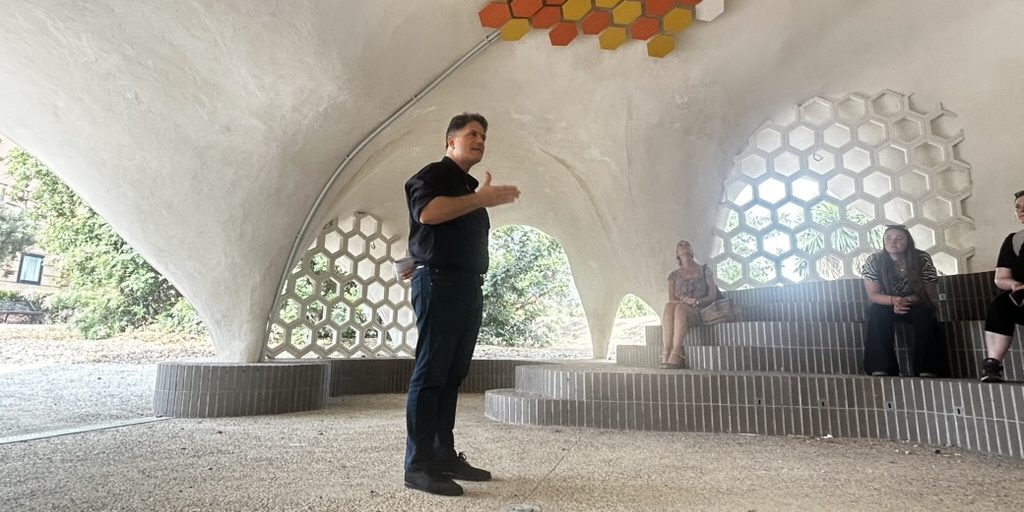
    We also spent a day at the University of Málaga (UMA), where we explored further the importance of creating mindful spaces. Our first visit was to the Faculty of Education, where Dr Juan G, a renowned local architect, explained the design of a sustainable outdoor classroom affectionately known as “The Mushroom.” This space encourages meditation and small group collaboration in an open-air environment far removed from traditional classrooms.

    Dra Luisa M also spoke about how mindfulness is being integrated into teacher training programmes at UMA, as well as other university faculties—showing highly positive results in both student and staff well-being.

    Our visit continued to the Botanical Garden, where we were welcomed by biologist Dra Rosa P and our colleague at Laurus, Nathalie Borges. Together, we’ve used this space for activities during a mindful summer camp for children. The garden offers an ideal setting for all kinds of mindfulness practices—from quiet reflection and observation to active learning about nature and regeneration.

    We concluded our university visit at the Faculty of Psychology, where we toured a dedicated meditation room—an intentionally designed space for mindfulness practice by our host Dra Myriam D. Having a room like this in your school or faculty can be a powerful tool for introducing mindfulness and fostering a culture of well-being within the educational community. We also received a practical class from our colleague Teresa Roura.

    The purpose of this blog is to invite you to reflect on the importance of physical space in nurturing well-being, regeneration, and effective learning.

    If you’d like to know more about how we can help you create or transform such a space, please don’t hesitate to get in touch.