Tag: Bienestar emocional

  • Formación docente en bienestar y mindfulness | Teacher training in wellbeing and mindfulness (Málaga)

    Formación docente en bienestar y mindfulness | Teacher training in wellbeing and mindfulness (Málaga)

    Teacher training in wellbeing and mindfulness: a regenerative learning experience in Málaga with teachers from Wales

    A week to regenerate education through wellbeing

    Mindfulness and teacher wellbeing training in Málaga

    From 2 to 5 December, Málaga hosted an international teacher training experience focused on wellbeing, mindfulness, and regenerative education. A group of 21 teachers from Wales took part in an intensive programme that combined professional learning, personal reflection, and a close connection with real educational practice.

    The training was delivered by Accipe and funded by Taith, in collaboration with ILG and Cardiff City Council, and facilitated by Lawrence Body, founder of Laurus Regenerative. The programme integrated mindfulness in education, emotional intelligence, and teacher wellbeing, combining theory and practice through a deeply experiential approach.

    Learning through experience: mindfulness applied to educational practice

    One of the central elements of the programme was experiential learning. Beyond theoretical content, participants were invited to observe their own experience as educators, reflect on their wellbeing, and explore how it directly influences classroom climate and learning processes.

    Through mindfulness practices, group dynamics, and spaces for conscious dialogue, a safe environment was created where teachers could share real, everyday challenges. This approach helped connect personal wellbeing with educational quality and meaningful support for students.

    The school as a space for wellbeing and transformation

    As part of the programme, participants visited CEIP San José de Calasanz in Málaga, where time was shared with headteacher Carmen Ortiz, the teaching staff, and students. This experience offered a clear insight into how integrating wellbeing into school life can have a profound impact on relationships, motivation, and ways of learning.

    Beyond academic outcomes, it became evident that an education which truly cares for people creates more human, coherent, and sustainable learning environments.

    Wellbeing and regenerative education at the university

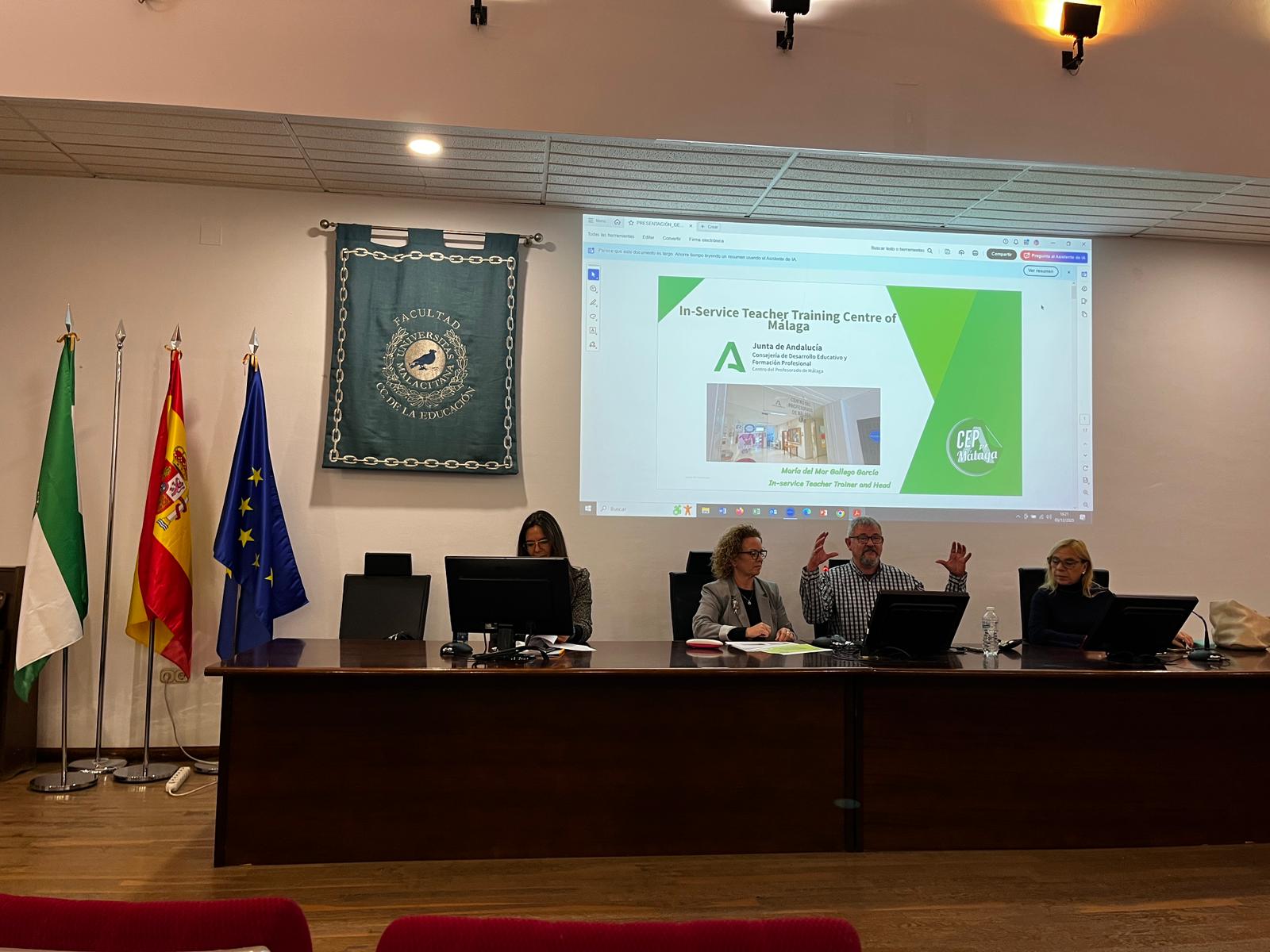
    The training week also included a conference at the Faculty of Education of the University of Málaga, hosted by Amparo Civila, Vice-Dean for Mobility and International Relations. This event brought together professionals from diverse educational contexts and encouraged international exchange and dialogue.

    Speakers included María del Mar Gallego, Director of the CEP of Málaga; Gemma Muñoz from CEIP Daidín in Benahavís; Kate Martin, Head of the Wellbeing Curriculum at Cardiff City Council; Rocío González, Lecturer in Education at the University of Málaga; and Lawrence Body, who shared Laurus Regenerative’s perspective on wellbeing, regeneration, and conscious education.

    Their contributions offered practical examples of how wellbeing can be integrated into real educational settings, while respecting the rhythms, needs, and realities of both teachers and students.

    Regenerative education: caring in order to transform

    This teacher wellbeing training experience highlighted a key insight: educational transformation begins in everyday practice. In how we relate to one another, in how we care for those who teach, and in how we create spaces where it is possible to pause, breathe, and reconnect with the purpose of education.

    At Laurus Regenerative, we believe that supporting teachers on this journey is a direct way to foster a more conscious, inclusive, and resilient education system—one that not only transmits knowledge, but also cares, inspires, and regenerates.

    If this approach resonates with you or with your educational institution, we would be delighted to continue sharing and co-creating future learning experiences together.

  • Evento Especial: Paseo Regenerativo y Consciente por la Playa del Peñon del Cuervo / Special Event: Regenerative and Mindful Walk along Peñón del Cuervo Beach

    Evento Especial: Paseo Regenerativo y Consciente por la Playa del Peñon del Cuervo / Special Event: Regenerative and Mindful Walk along Peñón del Cuervo Beach

    Evento Especial: Paseo Regenerativo y Consciente por la Playa del Peñon del Cuervo

    Duración 4 horas aproximada  de 10-14h

    El domingo 26 de octubre te invitamos a un encuentro único:

    • Paseo consciente, sensorial y regenerativo con actividades de mindfulness con Lawrence de Laurus. 
    • “Playas en el aire y un bosque sumergido” Guiado por Alberto Ramos 

    Alberto es fundador de Sema Entornos, instructor de snorkel y buceo, y guía especializado en experiencias marinas. Con una sólida trayectoria en educación ambiental y turismo sostenible, Alberto se dedica a transmitir su pasión por el mar, enseñando a descubrir sus tesoros naturales y culturales desde una mirada cercana, didáctica y respetuosa. 

    Sema Entornos nace con la misión de acercar la naturaleza marina a la ciudadanía a través de experiencias educativas, inclusivas y sostenibles. Promueve la conservación del medio marino y la participación activa de la comunidad, combinando el ocio con la sensibilización ambiental.

    Un fascinante paseo a pie en el que descubrirás las formas que tuvo este paisaje de paleoentorno marino donde habitaron las primeras especies humanas de Málaga. Desde un acantilado sobre un valle boscoso habitado por uros, osos y neandertales hasta una costa de aguas calientes con cuevas que albergaban playas en su interior, las cuales, para poder verlas hoy hay que mirar hacia arriba desde la orilla.

    • Visita guiada al museo del Centro de Interpretación de los Yacimientos de La Araña.

    Un arqueólog@ nos mostrará las evidencias de los primeros habitantes de la ensenada de Málaga (Preneandertales, Neandertales y Sapiens modernos) halladas en las playas y abrigos visitados, y que hoy se custodian en este museo.

    • Cerramos la actividad con un espacio de intercambio y reflexión.

    💰 Precio: 40€ – con hasta 10€ de descuento para miembros Laurus, solicita tu código.

    Special Event: Regenerative and Mindful Walk along Peñón del Cuervo Beach

    Duration: 4 hours aprox. 10-14h.

    On Sunday, October 26, we invite you to enjoy a unique experience:

    • Mindful, sensory, and regenerative walk with guided mindfulness activities led by Lawrence from Laurus.
    • “Beaches in the Air and a Sunken Forest” guided by Alberto Ramos.

    Alberto is the founder of Sema Entornos, snorkel and diving instructor, and a specialized guide in marine experiences. With a solid background in environmental education and sustainable tourism, Alberto is dedicated to sharing his passion for the sea — helping participants discover its natural and cultural treasures through a close, educational, and respectful approach.
    Sema Entornos was created with the mission of bringing marine nature closer to people through educational, inclusive, and sustainable experiences. The project promotes marine conservation and active community participation, combining leisure with environmental awareness.

    This fascinating coastal walk will reveal the paleo-marine landscapes where the first human species of Málaga once lived: from a cliff overlooking a forested valley inhabited by aurochs, bears, and Neanderthals, to a warm-water coastline with caves that once held hidden beaches — which today can only be seen by looking upward from the shore.

    • Guided visit to the Interpretation Center Museum of La Araña Archaeological Sites.
      An archaeologist will introduce us to the evidence of the first inhabitants of Málaga Bay (Pre-Neanderthals, Neanderthals, and modern Homo sapiens), found in the beaches and shelters we will explore and now preserved in the museum.
    • We will close the activity with a space for sharing and reflection.

    💰 Price: €40 – with up to €10 discount for Laurus members.
    👉 Reserve your spot here

  • Fear is a dark room

    Fear is a dark room

    Fear Is a Darkroom: Learning to See Clearly in Times of Uncertainty

    «Fear is a darkroom where we develop our negatives.»
    This powerful metaphor was coined by one of my students during a class presentation on anxiety. The phrase has stuck with me ever since, and its impact feels even more profound today.

    Though the image might seem outdated in our digital age, it still resonates deeply. Fear, much like a darkroom, can amplify the negative aspects of our experience. Yet it’s also a natural and necessary human emotion—designed to help us survive.

    In this post, I want to explore fear: how we experience it, how we react to it, and how we might begin to manage it more mindfully, especially in an age saturated by media, information, and uncertainty.


    Fear: Our Companion and Our Captor

    Fear often arises in response to uncertainty, perceived danger, or threat. It can be an essential ally, alerting us to danger and helping us protect ourselves. But fear can also become inappropriate, contagious, and destructive—especially when left unexamined.

    Much of our response to fear is shaped by past experiences. If you were once chased by a dog and ran away unscathed, you might adopt avoidance as your go-to strategy—not just with dogs, but in any situation that provokes anxiety. But avoidance can become limiting. It keeps us confined to a «comfort zone» and prevents growth.

    Sometimes our fears aren’t even based on personal experience, but on secondhand information—what we’ve been told or what we observe in others. Remember the panic-buying during the early days of COVID-19? It wasn’t just fear of the virus, but fear of scarcity, stoked by media images and collective behavior.


    The Conditioning of Fear

    Our reactions to fear are often conditioned responses. We learn them from the people around us—parents, caregivers, teachers, friends—and from what has worked for us in the past.

    But here’s the catch: strategies that helped us once might not serve us in every situation. And when fear leads us to always flee, isolate, or over-control, we risk cutting ourselves off from growth, connection, and insight.

    In a world flooded with polarizing opinions, headlines, and “truths,” we often cling to whatever reinforces our worldview. That gives us a sense of security. But are we really seeking truth—or just emotional reassurance?


    A Little Experiment

    Let’s pause for a moment. Try this small emotional awareness experiment:

    Read the two statements below and observe your internal reaction:

    1. “We have become slaves and victims of state propaganda and of the fears they have induced to keep us quiet and grateful for our lot.”
    2. “The media and our democratically elected government, in tandem with science, are doing everything they can to protect, inform and look after us.”

    Now ask yourself:

    • Which one do you feel is more true?
    • How did you arrive at that conclusion?
    • Were your emotions involved?
    • Were your beliefs or biases influencing your judgment?

    This experiment isn’t about choosing a side—it’s about observing your internal world.


    Mindfulness in Conflict Resolution

    Last year, I presented research on mindfulness and language teaching at an academic congress at the University of Zaragoza. One workshop stood out: it was led by a conflict mediator who uses mindfulness to work with deep-rooted disputes—religious, political, ethnic.

    His approach begins with active listening—asking each side to express their truth while the other listens in silence. He encourages moments of stillness, self-awareness, and even creative expression, like human sculptures representing each group’s perspective.

    Sometimes, this process softens barriers. People begin to see that beneath the anger and division, there is shared humanity—like love for family or desire for safety.

    And when dialogue stalls, he takes a bold next step: he invites each group to “find the lie hidden in their truth.” This can be transformational. Recognizing the grain of falsehood in our own beliefs helps us acknowledge the truth in others’. That mutual recognition is often the beginning of real resolution.


    Finding Space to Breathe

    With the constant noise of news and social media, it’s easy to feel overwhelmed. It’s okay—necessary, even—to disconnect sometimes. Find a quiet space, breathe, and allow yourself to feel without judgment.

    Fear is not inherently bad. But we must distinguish between real and present danger and fear based on imagined futures—what I call “Future Expectations Appearing Real.” That kind of fear can trap us.

    Staying alert is good—if it leads to awareness, wisdom, and compassion. But if it stems from irrational fear or constant vigilance, it becomes harmful.

    That’s why I would rewrite the well-known government slogan to say:
    “Stay mindfully alert. Protect your mental health and that of others.”


    A Mindful Path Through Fear

    Fear is with us. Always will be. But we don’t have to be ruled by it. Through mindfulness, we can learn to:

    • Stop and be
    • Breathe
    • Observe
    • Respond wisely

    By sitting with our fear and observing it clearly, we open the door to understanding and right action. In doing so, we not only manage our own emotions better—we also contribute to a wiser, more compassionate world.


    Thank you for reading. If this resonated with you or sparked any questions, I’d love to hear from you. Feel free to get in touch—especially if you’re interested in learning more about mindfulness, emotional awareness, or how these practices can support education and community wellbeing.

  • The importance of creating a conscious space

    The importance of creating a conscious space

     The Importance of Creating a Mindful Space

    In June 2025, we were fortunate to host a group of Welsh school teachers here in Málaga, in collaboration with our partners ACCIPE: https://accipe.org/  and the Welsh mobility programme TAITH (similar to Erasmus+).

    Málaga is a city that naturally invites mindful reflection. It delights the senses and fosters a sense of well-being, making it an ideal setting for our work together. The teachers stayed at El Seminario (La Casa Diocesana), a beautiful historic building that now hosts training groups focused on spirituality, therapy, or social development. It’s a space perfectly suited to mindfulness courses—one that invites guests to relax, disconnect, and reflect on both personal and professional contexts.

    Throughout the week, we combined daily mindfulness meditation practice with Social and Emotional Learning (SEL) applied to the teachers’ educational realities. The aim was to promote regeneration by engaging participants’ critical thinking and creativity, all grounded in active listening, empathy, and compassion.

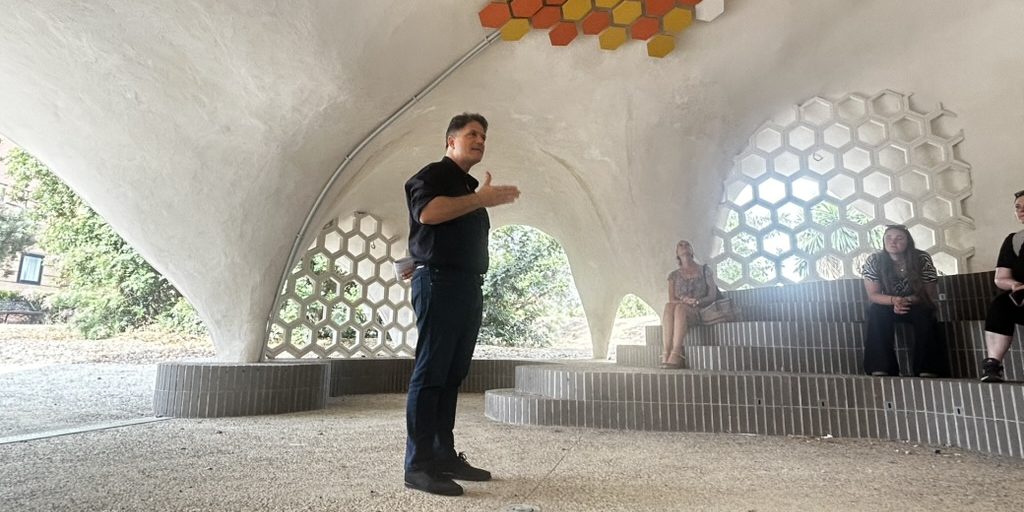
    We also spent a day at the University of Málaga (UMA), where we explored further the importance of creating mindful spaces. Our first visit was to the Faculty of Education, where Dr Juan G, a renowned local architect, explained the design of a sustainable outdoor classroom affectionately known as “The Mushroom.” This space encourages meditation and small group collaboration in an open-air environment far removed from traditional classrooms.

    Dra Luisa M also spoke about how mindfulness is being integrated into teacher training programmes at UMA, as well as other university faculties—showing highly positive results in both student and staff well-being.

    Our visit continued to the Botanical Garden, where we were welcomed by biologist Dra Rosa P and our colleague at Laurus, Nathalie Borges. Together, we’ve used this space for activities during a mindful summer camp for children. The garden offers an ideal setting for all kinds of mindfulness practices—from quiet reflection and observation to active learning about nature and regeneration.

    We concluded our university visit at the Faculty of Psychology, where we toured a dedicated meditation room—an intentionally designed space for mindfulness practice by our host Dra Myriam D. Having a room like this in your school or faculty can be a powerful tool for introducing mindfulness and fostering a culture of well-being within the educational community. We also received a practical class from our colleague Teresa Roura.

    The purpose of this blog is to invite you to reflect on the importance of physical space in nurturing well-being, regeneration, and effective learning.

    If you’d like to know more about how we can help you create or transform such a space, please don’t hesitate to get in touch.

  • Mindfulness en la Educación: Un Enfoque Integrador Basado en Proyectos

    Mindfulness en la Educación: Un Enfoque Integrador Basado en Proyectos

    Mindfulness in Education: An Integrative, Project-Based Approach

    This July, Laurus had the pleasure of being in Cork, Ireland, hosted by University College Cork (UCC) in collaboration with our partners Eurobjective https://www.eurobjective.com/

     Together, we delivered our ERASMUS+ course, «Mindfulness in Education: An Integrative, Project-Based Approach», designed specifically for secondary school teachers across Europe.

    A Holistic Learning Experience

    The course introduces participants to the foundations of mindfulness in an educational context. But it goes beyond the classroom: we explore how mindfulness can enrich students’ lives through connections with culture, history, local gastronomy, nature, and sport.

    Our approach encourages teachers to observe themselves in relation to these topics, fostering both personal well-being and creative professional growth. The goal? To return to their schools equipped not only with new skills, but with renewed energy and a fresh perspective.

    A Warm Welcome at UCC

    From day one, our hosts at UCC impressed us: https://www.ucc.ie/en/visitorservices/ The head of visitor services—an engaging storyteller—led us on a historical and cultural tour of the campus and its magnificent trees. A highlight of the visit was learning about UCC’s regenerative landscaping project, which includes wildflower zones, natural habitats for wildlife, and even an on-site resident beekeeper. This initiative has earned UCC international recognition, placing it 4th globally in environmental university rankings and in the top 10 for eight consecutive years.

    Cultural Immersion and Mindful Reflection

    We immersed ourselves in Cork’s rich cultural offerings, integrating music and art into our training. A visit to the Glucksman Gallery included a thought-provoking exhibition on well-being, where teachers were invited to engage in mindful reflection on selected works of art.

    Another day led us to the iconic English Market and its renowned Farmgate Restaurant, where we practiced sensory mindfulness while enjoying local, ecological produce—including the famous Stonewell Cider.

    The GROW Projects: Regenerating Classrooms

    Throughout the course, participants were guided to design their own GROW Project—a mindfulness-based initiative tailored to their school environments. These projects are intended to regenerate classroom dynamics, enhance student well-being, and foster a sense of joy, trust, and connection in learning spaces.

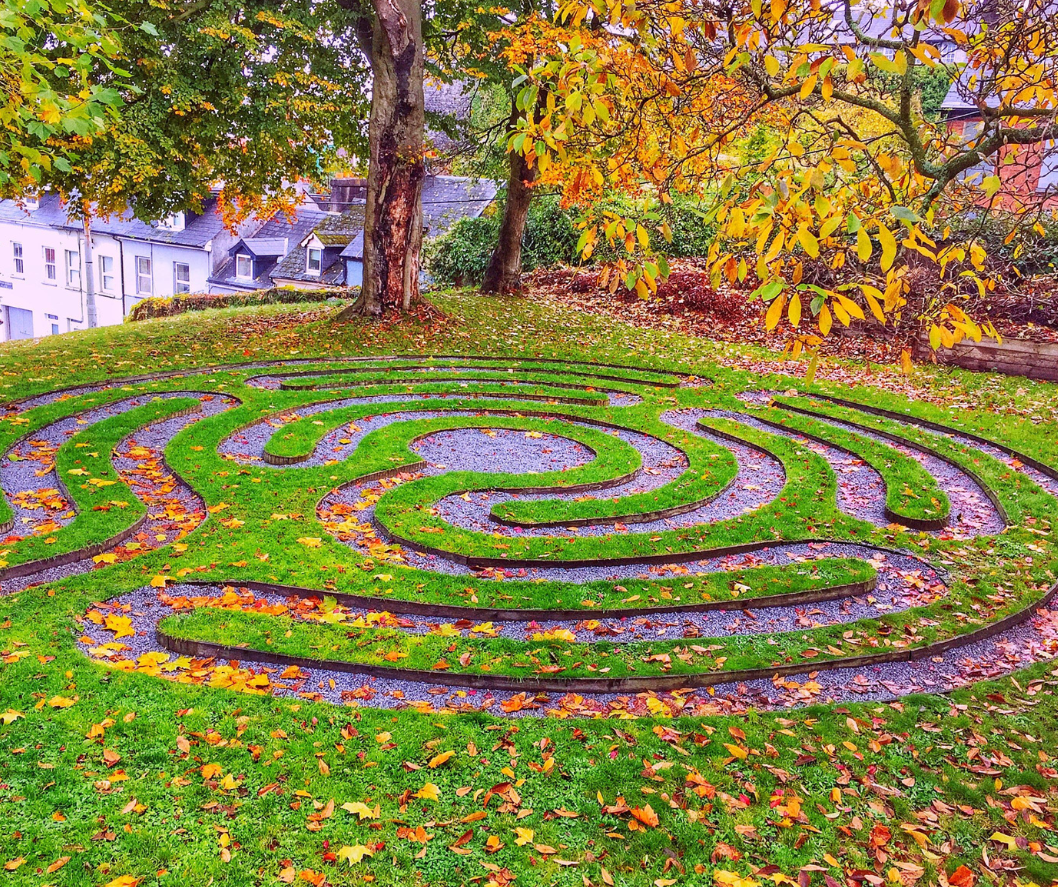
    To close the week, we walked the labyrinth at St. Fin Barre’s Cathedral, a contemplative journey symbolizing the integration of learning and inner transformation. Participants were invited to interiorize their insights and prepare to share them with their communities back home.

    Join Us in Ireland – Summer 2026

    Would you like to be part of this transformative experience in the summer of 2026? Explore our upcoming training opportunities in the ERASMUS+ section for teacher mobility and professional development.

  • Mindfulness y Educación

    Mindfulness y Educación

    Editor: José Emilio Palomero Pescador

    Monografía coordinada por Pablo Palomero Fernández


    RIFOP. Año 30. Con el presente número (30.3. Diciembre 2016), en el que publicamos una monografía sobre mindfulness y educación, la Revista Interuniversitaria de Formación del Profesorado (RIFOP) cumple su trigésimo aniversario. Por ello comenzaremos este editorial haciendo un breve recorrido por su historia.

    En la página 47 se puede leer los resultados de nuestra investigación sobre formación de mindfullness para el profesorado del CEP de Málaga.